Twist Bioscience本社
681 Gateway Blvd
South San Francisco, CA 94080
NGS キット
全般
はい。これらは同じビーズですが、充填量が違うだけなので、使用できます(補足:NEBNext Enzymatic Methyl-seq Library Preparation Protocolで使用する101979 Twist Total Purification Beadsは異なるビーズであり、互換性がありません)。
コンビナトリアルアダプター、ユニークデュアルインデックスアダプターには、以下の配列をアダプタートリミングに使用します。
リード 1:AGATCGGAAGAGCACACGTCTGAACTCCAGTCA
リード2:AGATCGGAAGAGCGTCGTGTAGGGAAAGAGTGT
Twist Bioscience では、キットの保証期間を出荷日から最短3ヵ月としています。
SDS は、当社サイトのこちらのページからダウンロードできます。
なお、NGS製品のSDSドキュメントはウェブページにのみ掲載しています。合成生物学製品のSDSドキュメントについては、customersupport@twistbioscience.comまでメールでお問い合わせください。
ライブラリ調製
Yes, Twist adapters are compatible with DNA dsgenerated by either enzymatic or mechanical fragmentation.
はい。Twist Library Prepキットは、全ゲノムシーケンス(WGS)用のライブラリの作成に適しています。
ほとんどのWGSアプリケーションでは、より長いリード(WGSでは2x151、全エクソームシーケンスでは2x101または2x76)を使用するため、より長い断片長に対応するために断片化条件を変更する必要があります。
酵素による断片化キットの場合、断片の長さは、時間、温度、DNAインプットの3つの要素に依存します。
物理的断片化の場合、断片がより長くなるように条件(時間、power、duty factor、バーストあたりのサイクル数)を設定する必要があります。
はい。 Twist では最大限柔軟に対応させていただいており、 NGS キットに含まれる製品を個別に販売しています。購入可能な全製品のリストは、お客様の Twist アカウントにログインすることでもご確認いただけます。以下の製品をご購入可能です。
ライブラリ調製用
- PN 100253 – TWIST LIBRARY PREP EF KIT 1, 16 SAMPLES
- PN 100875 – TWIST LIBRARY PREP MF KIT 1, 16 SAMPLES
- PN 100401 – TWIST LIBRARY PREP KIT 2, 16 SAMPLES
- PN 100572 – TWIST LIBRARY PREP EF KIT 1, 96 SAMPLES
- PN 100876 – TWIST LIBRARY PREP MF KIT 1, 96 SAMPLES
- PN 100573 – TWIST LIBRARY PREP KIT 2, 96 SAMPLES
コンビナトリアルアダプター
- PN 100255 – 16 SAMPLES
ユニークデュアルインデックス付きアダプター
- PN 101307 – TWIST UNIVERSAL ADAPTER SYSTEM, 16 SAMPLES
- PN 101308 – TWIST UNIVERSAL ADAPTER SYSTEM, 96 SAMPLES – PLATE A
- PN 101309 – TWIST UNIVERSAL ADAPTER SYSTEM, 96 SAMPLES – PLATE B
- PN 101310 – TWIST UNIVERSAL ADAPTER SYSTEM, 96 SAMPLES – PLATE C
- PN 101311 – TWIST UNIVERSAL ADAPTER SYSTEM, 96 SAMPLES – PLATE D
ブロッカー
- PN 100856 – TWIST UNIVERSAL BLOCKERS, 2 REACTIONS
- PN 100578 – TWIST UNIVERSAL BLOCKERS, 12 REACTIONS
- PN 100767 – TWIST UNIVERSAL BLOCKERS, 96 REACTIONS
ハイブリダイゼーション用試薬*
- PN 101263 – HYBRIDIZATION REAGENTS, 2 REACTIONS
- PN 100930 – HYBRIDIZATION REAGENTS, 12 REACTIONS
- PN 100982 – HYBRIDIZATION REAGENTS, 96 REACTIONS
高速ハイブリダイゼーション用試薬*
- PN 101260 – FAST HYBRIDIZATION REAGENTS, 2 REACTIONS
- PN 100964 – FAST HYBRIDIZATION REAGENTS, 12 REACTIONS
- PN 100968 – FAST HYBRIDIZATION REAGENTS, 96 REACTIONS
洗浄バッファー*
- PN 101264 – WASH BUFFERS, 2 REACTIONS
- PN 100985 – WASH BUFFERS, 12 REACTIONS
- PN 100846 – WASH BUFFERS, 96 REACTIONS
高速洗浄バッファー*
- PN 101261 – FAST WASH BUFFERS, 2 REACTIONS
- PN 100971 – FAST WASH BUFFERS, 12 REACTIONS
- PN 100972 – FAST WASH BUFFERS, 96 REACTIONS
精製・結合用ビーズ
- PN 101262 – PURIFICATION AND STREPTAVIDIN BEADS, 2 REACTIONS
- PN 100983 – PURIFICATION AND STREPTAVIDIN BEADS, 12 REACTIONS
- PN 100984 – PURIFICATION AND STREPTAVIDIN BEADS, 96 REACTIONS
*注:ハイブリダイゼーション用試薬は洗浄バッファーと一緒に使用し、高速ハイブリダイゼーション用試薬は高速洗浄バッファーと一緒に使用してください。ハイブリダイゼーション用試薬と高速洗浄バッファーを一緒に使うと(またはその逆も)、パフォーマンス低下につながります。
はい。 Twist は物理的断片化を利用したキット以外にも、酵素による断片化を利用した以下のライブラリ調製キットを提供しています。
100253: Twist Library Preparation Kit, Enzymatic Fragmentation, 16 Samples (includes enzymes and buffers)
101059:Twist Library Preparation Kit, Enzymatic Fragmentation, 16 Samples(内容物:酵素、バッファー、精製ビーズ)
100572: Twist Library Preparation Kit, Enzymatic Fragmentation, 96 Samples (includes enzymes and buffers)
101058: Twist Library Preparation Kit, Enzymatic Fragmentation, 96 Samples (includes enzymes, buffers, and purification beads)
なお、ライブラリ調製には以下のようなアダプターも必要です。
101307: Twist Universal Adapter System, 16 Samples
101308:Twist Universal Adapter System, 96 Samples – Plate A
101309: Twist Universal Adapter System, 96 Samples – Plate B
101310: Twist Universal Adapter System, 96 Samples – Plate C
101311: Twist Universal Adapter System, 96 Samples – Plate D
はい。 Twist は酵素による断片化を利用したキット以外にも、物理的断片化を利用した以下のライブラリ調製キットを提供しています。
100875: Twist Library Preparation Kit, Mechanical Fragmentation, 16 Samples (includes enzymes and buffers)
101280:Twist Library Preparation Kit, Mechanical Fragmentation, 16 Samples(内容物:酵素、バッファー、精製ビーズ)
100876: Twist Library Preparation Kit, Mechanical Fragmentation, 96 Samples (includes enzymes and buffers)
101281: Twist Library Preparation Kit, Mechanical Fragmentation, 96 Samples (includes enzymes, buffers, and purification beads)
なお、ライブラリ調製には以下のようなアダプターも必要です。
101307: Twist Universal Adapter System, 16 Samples
101308:Twist Universal Adapter System, 96 Samples – Plate A
101309: Twist Universal Adapter System, 96 Samples – Plate B
101310: Twist Universal Adapter System, 96 Samples – Plate C
101311: Twist Universal Adapter System, 96 Samples – Plate D
推奨される平均的なターゲット断片長は 200 bp です。この場合、平均的なライブラリサイズは約 350 bp となりますが、シーケンスリードの長さに応じてインサートのサイズを調整する必要があります。
Twistでは、酵素による断片化と物理的断片化の両方に対応した完全な*キットを提供しています - これらのキットにはエンリッチメントパネルは含まれていません。
酵素による断片化
- PN 101897 – TWIST EF LIBRARY PREP + UDI AND STANDARD HYB, 16x2 REACTIONS
- PN 101896 – TWIST EF LIBRARY PREP + UDI AND FAST HYB, 16x2 REACTIONS
- PN 101901 – TWIST EF LIBRARY PREP + UDI AND STANDARD HYB, 96x12 REACTIONS
- PN 101900 – TWIST EF LIBRARY PREP + UDI AND FAST HYB, 96x12 REACTIONS
物理的断片化
- PN 101899 – TWIST MF LIBRARY PREP + UDI AND STANDARD HYB, 16x2 REACTIONS
- PN 101898 – TWIST MF LIBRARY PREP + UDI AND FAST HYB, 16x2 REACTIONS
- PN 101903 – TWIST MF LIBRARY PREP + UDI AND STANDARD HYB, 96x12 REACTIONS
- PN 101902 – TWIST MF LIBRARY PREP + UDI AND FAST HYB, 96x12 REACTIONS
*注:ライブラリの作成と増幅には、KAPA® HiFi HotStart ReadyMix(Kapa Biosystems®, #KK2601)またはその同等品を購入する必要がありました。新製品のEF2.0キットにはEqunox Library Amp Mixが含まれていますので、購入の必要はありません。
50 ng の DNA をインプットとして用いた場合、アダプターと DNA の比率は約 200 : 1 です。
Twist TrueAmp Library Preparation Kit
The TrueAmp Library Preparation Kit is designed for flexible DNA library construction across a wide range of sample types and input amounts. It supports an integrated workflow where fragmentation, end repair, and dA-tailing are performed in a single enzyme mix, simplifying the overall process.
The kit performs robustly across diverse DNA inputs, including FFPE samples or samples with varying GC content and is compatible with DNA in common storage buffers such as TE, Tris-HCl, or water.
It also enables consistent and reliable fragmentation using a single standardized protocol, while also allowing users to tune insert size by adjusting incubation time or temperature. The streamlined workflow can be completed in approximately 3 hours, with less than 15 minutes of hands-on time, and is designed to maximize library yield through high reaction efficiency and minimal sample loss.
The TrueAmp Library Preparation Kit supports a broad range of DNA input amounts, from as low as 100 pg up to 1 µg. This flexibility enables reliable library preparation across low-input and high-input sample types.
No, the TrueAmp Library Preparation Kit is not compatible with bisulfite conversion or EM-seq workflows. The enzymatic steps in the TrueAmp Library Preparation workflow include DNA repair, which can alter or remove native methylation signatures.
For methylation-sensitive applications such as bisulfite or EM-seq, we recommend using mechanical shearing (e.g., sonication) followed by the Twist cfDNA Library Preparation Kit, which is better suited for preserving methylation information.
The TrueAmp Library Preparation Kit is not recommended for cfDNA workflows. Since cfDNA is already fragmented, the enzymatic fragmentation step is unnecessary. While it is possible to skip fragmentation and proceed with end repair and dA-tailing, the one-pot workflow may not deliver optimal conversion efficiency for these short fragments.
For best performance and highest library conversion from cfDNA, we recommend using the Twist cfDNA Library Preparation Kit, which is specifically optimized for cell-free DNA.
Yes, the TrueAmp Library Preparation Kit performs well with degraded and FFPE-derived DNA. The workflow includes DNA repair activity, which can help restore damaged bases commonly found in FFPE samples.
As a result, users often observe improved library yield and recovery compared to workflows without repair. Some optimization (e.g., fragmentation time, PCR cycles) may be required depending on sample quality.
はい。The TrueAmp fragmentation chemistry is broadly compatible with a range of double-stranded DNA inputs, including genomic DNA (gDNA), plasmids, and PCR-derived amplicons. Under consistent reaction conditions, high-quality DNA substrates, regardless of origin, typically yield comparable fragment size distributions, indicating minimal sequence or topology-dependent bias.
During development, fragmentation performance was evaluated using DNA ladders spanning a wide range of fragment sizes. This study demonstrates that the enzymatic fragmentation preferentially processes larger DNA molecules while maintaining representation of shorter fragments, resulting in a controlled size distribution without significant loss of diversity across the input population.
Yes, the TrueAmp Library Preparation Kit is well suited for targeted enrichment workflows, including hybrid capture applications. It generates high library yields and promotes uniform molecule conversion, which supports efficient and consistent downstream target capture performance.
Yes, the TrueAmp Library Preparation Kit is compatible with liquid handling automation platforms such as Hamilton systems. The streamlined workflow, reduced number of steps, and minimal hands-on time make it well suited for automation. Minor optimization (e.g., mixing, bead handling, or liquid classes) may be required depending on the platform and configuration.
No. The enzymatic fragmentation chemistry is designed to produce consistent fragment sizes across the recommended input range, so fragmentation time and temperature do not need to be adjusted based on DNA mass.
Under the same conditions, samples with similar DNA quality ranging from 0.1 ng to 500 ng will generate comparable fragment size distributions. As demonstrated above, human genomic DNA inputs from 0.1 ng to 500 ng fragmented at 32°C for 22 minutes produced similar final library sizes (~450–480 bp), with PCR cycle number increasing as input mass decreased.
Input DNA quality directly affects fragment size. High-quality, intact DNA produces predictable insert sizes, while degraded or pre-sheared DNA (e.g., FFPE) typically results in shorter fragments under the same conditions. In these cases, reducing fragmentation time or temperature and applying size selection may help achieve the desired insert size.
Fragment size can be controlled by adjusting fragmentation reaction temperature and incubation time. Increasing either parameter generally results in shorter DNA fragments, while reducing them produces longer fragments.
Because fragmentation performance can vary depending on thermocycler calibration, DNA input quality, and storage buffer composition, we recommend performing a small design of experiments (DOE) with your specific samples to determine optimal conditions prior to scaling up.
For additional guidance and example data, please refer to the Twist TrueAmp Library Preparation Kit technical note on insert size optimization.
Yes, fragmented and end-prepped DNA can be safely stored at either 4 °C or -20 °C (e.g., overnight) prior to ligation without any appreciable impact on library preparation performance as compared to samples processed immediately. This has been validated across technical replicates (n=3), where samples were stored under these conditions before ligation and showed consistent results.
はい。Vortexing the 10X Twist Fragmentation Enzyme Mix prior to use is important to ensure the solution is fully homogeneous. Failure to properly mix the enzyme solution may lead to variability in fragmentation performance and inconsistent results.
The TrueAmp Library Preparation Kit is designed for flexibility and is compatible with a wide range of 3′ T-overhang adapters. Note that adapter quality impacts overall library preparation efficiency. For optimal performance, we recommend using validated Twist adapter systems:
● Twist Universal Adapter System (SKU: 101308)
○ Requires PCR amplification with indexed primers to complete library construction.
● Twist UMI Adapter System (SKU: 105041)
○ Requires PCR amplification with indexed primers.
○ Enables incorporation of Unique Molecular Identifiers (UMIs) for improved error correction and duplicate handling.
● Twist Full-Length UDI Adapters (SKU: 107376)
○ Do not require PCR for index incorporation, as full-length P5/P7 sequences and indices are already present.
○ Optional PCR may still be performed for library amplification if additional yield is needed.
All three systems are fully compatible with the TrueAmp workflow. Selection should be based on your application needs (e.g., UMI requirements, workflow, or PCR-free indexing preference).
Adapter input should be adjusted based on DNA input amount and fragment size to maintain sufficient adapter-to-insert molar excess for efficient ligation while minimizing adapter-dimer formation. Twist Universal Adapters are supplied at 10 µM and recommended conditions in the protocol are designed to maintain an adapter-to-insert molar ratio of approximately ≥150:1 for robust ligation efficiency across a broad range of inputs. Too little adapter may reduce library conversion and yield, while excessive adapter can increase adapter-dimer carryover, particularly in low-input samples.
If optimization is required, titrate adapter input while monitoring final library yield and adapter-dimer levels. The optimal condition is the lowest adapter amount that maintains strong library yield with minimal adapter dimer.
For ultra-low input samples (<1 ng), additional optimization may be required to balance ligation efficiency against adapter-dimer formation, as reduced insert mass increases the likelihood of adapter self-ligation products. Conversely, for higher DNA input amounts, increasing adapter concentration beyond the recommended range may further improve ligation efficiency in some workflows.
Yes, contaminants such as salts, EDTA, ethanol, detergents, and extraction reagent carryover can impact enzymatic fragmentation. These may either inhibit or enhance enzyme activity, leading to inconsistent or shifted fragment sizes.
In some cases, fragmentation can be tuned by adjusting incubation time or temperature to compensate. However, if inhibitors significantly disrupt enzyme activity and no library is generated, we recommend performing an additional DNA cleanup before library preparation.
Three independent manufacturing lots were evaluated to assess fragmentation variability, with an additional operator performing replicate testing on a separate day to characterize operator-to-operator effects.
Fragmentation with the TrueAmp Library Preparation Kit demonstrates high reproducibility within a given lot, with technical replicates (n=8) showing tight fragment size distributions and a standard deviation of ~7–10 bp (~2% CV). Across manufacturing lots, modest shifts in the mean fragment size are observed (~30–40 bp, or ~5–8% deviation), while maintaining consistent distribution shape and overall library performance. Operator-to-operator variability can introduce similar shifts in the average fragment size, as observed within the same lot; however, these differences should not meaningfully impact the distribution profile or downstream performance.
はい。The TrueAmp reagents have been tested through up to four freeze-thaw cycles with no observed impact on performance. These studies were conducted over multiple days to reflect typical laboratory use. As a best practice, repeated freeze–thaw cycles should still be minimized when possible.
The TrueAmp Library Preparation Kit has a shelf life of 12 months when stored as recommended. This is supported by accelerated aging studies conducted over 13 months, which showed no measurable impact on performance or stability.
Yes, we offer flexible customization options to support a wide range of specialized requirements or unique applications. For more information or to discuss your specific requirements, please contact our team.
The TrueAmp Library Preparation Kit is not recommended for workflows where DNA is already sheared or where native DNA modifications must be preserved. This includes applications such as cfDNA library preparation and methylation-sensitive workflows (e.g., bisulfite or EM-seq). For these use cases, alternative workflows or kits optimized for those applications are recommended.
The insert is the DNA of interest generated during fragmentation. The insert size refers to the length of this DNA region. The fragment (or sequencing fragment/library) includes the insert plus the sequencing adapters ligated to both ends. Therefore, fragment size = insert size + adapter sequences. Traditional adapter sequences are roughly 65-70nt long but dependent on the presence of UMIs or length of indexes. In paired-end sequencing, reads are generated from both ends of the insert. If the insert is longer than the combined read length, a portion in the middle remains unsequenced. If the insert is shorter, reads may overlap or extend into adapter sequences.
Insert size impacts library yield, sequencing performance, and downstream applications. Smaller fragments typically amplify more efficiently and can result in higher yields, while larger fragments may reduce cluster generation efficiency on some sequencing platforms. Insert size also influences data quality metrics such as coverage uniformity, duplication rates, and alignment efficiency.
This is especially true in targeted enrichment workflows, including multiplexed captures, where the same mass input (e.g., 500 ng) represents a different number of molecules depending on fragment size. Smaller libraries contain more molecules than larger ones at the same mass, which can affect capture efficiency and sample balance.
Additionally, larger insert sizes in target enrichment workflows can increase the proportion of near-bait reads, as longer fragments extend beyond the probe-binding region. Insert size should also be considered relative to sequencing read length. For paired-end sequencing (e.g., 2×75 bp or 2×150 bp), inserts that are too short may result in overlapping reads or sequencing into adapter regions, reducing usable data. Selecting an appropriate and consistent insert size for your application helps ensure optimal sequencing performance and reliable downstream analysis.
Shorter-than-expected fragments typically result from degraded or pre-sheared input DNA, excessive fragmentation time or temperature, or buffer components (e.g., salts) that increase enzymatic activity. We recommend reducing fragmentation time or temperature and confirming input DNA quality to help achieve the desired insert size. If needed, performing a cleanup step prior to library preparation may improve consistency.
If your DNA has been sufficiently fragmented, the presence of multiple peaks, especially those appearing larger than the expected fragment size, is typically an artifact of library preparation rather than true size distribution:
1.PCR overamplification and heteroduplex formation.
During excessive PCR cycling, DNA strands from different templates can anneal to each other, forming heteroduplexes. These structures migrate more slowly during capillary electrophoresis (e.g., TapeStation or Bioanalyzer), which can create the appearance of larger fragment sizes or additional peaks.
For additional information, please refer to the technical note on heteroduplexes: https://www.twistbioscience.com/resources/white-paper/heteroduplexes-affect-library-size-determination-without-impacting-targeted
Overcycling can introduce heteroduplex artifacts in adapter-ligated libraries. Samples of the gDNA library were subjected to 2x increments in rounds of PCR amplification. Top/Middle: Schematic of homoduplex and heteroduplex formation during PCR amplification. With appropriate amplification, library molecules form homoduplex products. With excessive PCR cycling, related but non-identical library molecules can misanneal, forming heteroduplex species that migrate aberrantly during electrophoresis. Bottom: Bioanalyzer electropherograms representing increasing PCR cycles (left to right, 4 - 12 cycles). PCR libraries show progressively broad, irregular peaks and apparent high-molecular-weight species, consistent with heteroduplex formation from overamplification.
2.Adapter structure effects (full-length Y adapters)
Libraries constructed with full-length Y adapters (containing both P5 and P7 sequences) can exhibit altered migration behavior due to their partially single-stranded structure. This can cause fragments to appear larger than their true size during electrophoretic analysis.
These 2 effects can be validated by performing a short “reconditioning PCR”: Use a small number of cycles (e.g., 2–5 cycles) with the inclusion of a high concentration of primers
This step promotes the formation of fully matched homoduplexes, which migrate more accurately during electrophoresis. After this treatment, the apparent fragment size distribution should shift closer to the expected profile.
Resolution of library fragment size following PCR amplification. 250ng of gDNA was fragmented at 25°C for 15 mins for a PCR-free protocol (A) TapeStation trace of a library immediately following ligation of Twist Full-Length UDI Adapters. The electropherogram shows multiple broad and irregular peaks, reflecting heterogeneous migration behavior caused by the Y-shaped adapter structure. These structural features can result in apparent high-molecular-weight species and poor size resolution. (B) TapeStation trace of the same library after 3 cycles of PCR amplification. PCR converts adapter-ligated molecules into fully double-stranded homoduplex products, resolving structural heterogeneity and yielding a defined fragment size distribution.
Low library yield can result from low input DNA, poor DNA quality, over- or under-fragmentation, or the presence of inhibitors that affect enzymatic steps. Additional factors such as improper size selection, incomplete ethanol removal, over-dried SPRI beads, or insufficient mixing during reactions may also reduce yield. Ensuring clean DNA input, optimizing fragmentation conditions, and following recommended SPRI handling and mixing practices should improve performance.
Adapter dimers or short fragments are typically observed with low input DNA, excess adapter concentration, or insufficient size selection. Additional causes include improper adapter handling (e.g., degradation or incorrect dilution) or pre-mixing adapters with ligation reagents. Optimizing adapter concentration, ensuring proper adapter handling, and performing appropriate SPRI cleanup (e.g., adjusting bead ratios or repeating cleanup) can help reduce these artifacts.
As a general starting point, the baseline fragmentation times and temperatures in the protocol are recommended to achieve insert sizes in the 200-250 bp range. Fragmentation behavior can vary depending on thermocycler calibration, DNA quality, and buffer composition. For best results, we recommend performing a small time-course optimization (DOE) using your specific samples and follow this decision tree for optimization of the target insert size.
The number of PCR cycles depends on input DNA amount and desired library yield. Lower input samples typically require more cycles to generate sufficient material, while higher input samples require fewer cycles to minimize duplication and preserve library complexity. Optimization may be required to balance yield and sequencing performance.
Twist TrueAmp Polymerase Mix
ホットスタートアプタマーは、低温(室温や卓上におけるセットアップ時など)で二次構造を形成して機能します。この二次構造はポリメラーゼ酵素に結合し、酵素を不活化します。高温(PCR 加熱サイクル時など)では、アプタマーの二次構造が変性し、酵素との結合が解離します。
QC プロセスの一環として、10 時間にわたる 37 °C のインキュベーションを行うことで、低温でのセットアップがパフォーマンスに影響を与えないようにしています。
新しい Twist TrueAmp Polymerase Mix は、高収量と堅牢なパフォーマンスが得られるように設計および最適化されており、100 fg までの低インプット DNA と標準インプットの両方を効率的に増幅できます。そのため多様な種類のサンプルに対して単一かつ高信頼性のソリューションとなっています。
The Twist TrueAmp Polymerase is engineered for enhanced proofreading, resulting in an ultra-low error rate and significant reduction in sequencing artifacts such as C>T substitutions. Internal testing has shown an absolute error rate of 1.17 × 10⁻⁶. Please take a look at our product sheet for more information.
当社のロングリードシーケンシングは、現在市場をリードするポリメラーゼと同等のパフォーマンスを有しており、既存製品に対して、そのまま置き換えることが可能ですが、当社は開発の方向性を転換し、高忠実度のロングリードソリューションに特化することを目指しています。
Twist TrueAmp Polymerase Mix は研究専用です。
Twist TrueAmp Polymerase Mix は –20 °C で発送され、同じ温度で保管する必要があります。
Twist TrueAmp Polymerase Mix は、凍結/解凍を 20 回繰り返してもパフォーマンスに変化がないことが確認されています。本製品は 2 年間安定して使用できます。
Twist cfDNA ライブラリ調製キット
はい、人工的に設計されたリガーゼは、最大のライゲーション効率を得るために、PEG のような分子クラウディング剤に頼らなくても済むように設計されています。PEG is automation-unfriendly, increases variability/viscosity, and negatively impacts downstream bead-based purification (SPRI). cfDNA 回収の最適比として 0.9X SPRI を推奨します(約 150〜167 bp)。For shorter cfDNA fragments, we recommend increasing the SPRI ratio to 1.0X or 1.1X.
はい、このキットの推奨プロトコルでは、cfDNA インプット量は 35 μl となっています。最大 50 μl までのインプット量で試験したところ、キットのパフォーマンスに悪影響はありませんでした。この場合、末端修復で反応液量が増加するするため、ライゲーション反応における水の量を減らすことを推奨します。
いいえ、本キットは 0.5 ng から最大 500 ng まで、幅広いサンプルインプットを処理することができます。
アダプター量と PCR サイクル数は、インプット量に合わせて変えることが必要です。
はい。The kit can be used with low input DNA samples that do not need fragmentation, or with pre-fragmented input DNA such as samples derived from FFPE material.
In tests performed with moderate DIN (3-5) FFPE curls from 4 sample sources (HG002, HG003, HG004, and Structural Multiplex Standard), results show that the cfDNA library preparation kit can be used on FFPE material and adapted for solid tumor workflows using cfDNA Library Prep Kit and the standard hybridization v2 protocol.
Note that DNA fragmentation is still necessary even for samples with a DIN score <2. Additionally, DNA input ranges will need to be increased to accommodate the availability of DNA from FFPE extraction (~100-500 ng per 15 μm curl).
cfDNA 抽出からキャリーオーバーした可能性のある高分子量(HMW)DNA が存在しないことを確認するために、Bioanalyzer High Sensitivity DNA Kit(Agilent)などのゲル電気泳動アッセイを使ったインプット cfDNA のサイズ分布の分析を推奨します。HMW DNA will negatively impact the accurate quantification of cfDNA input amounts. We also recommend quantifying input cfDNA with a Qubit high-sensitivity dsDNA assay (Thermofisher) for accurate DNA quantification.
はい、本キットは UMI を使って cfDNA ライブラリを調製します。
当社ではターゲットエンリッチメントに用いるライブラリのインプット量が、リードデプスの大きなシーケンシングライブラリの複雑性に影響を及ぼしうることを見出しました。この倍率(80x)は、経験的なデータに基づいて決定されました。このアプローチにより、エンリッチメントプロセスで最大の効果が得られます。
詳細につきましては、こちらから Twist の cfDNA Library Preparation Kit データシートをご参照ください。 https://www.twistbioscience.com/resources/technical-document/cfdna-library-prep-kit-datasheet
Twist のデータシートを参照して最適な cfDNA インプット量を決定することを推奨します: https://www.twistbioscience.com/resources/technical-document/cfdna-library-prep-kit-datasheet
最適な cfDNA インプット量は、標的 VAF での希望感度、二重化要件、パネル内容、入手可能なシーケンシングのリソースなどの変数を検討して決定すべきです。
ターゲットエンリッチメントに使用するライブラリ量は、ライブラリ調製時の cfDNA サンプルのインプット量に基づいて計算します。シングルプレックスまたは 8-プレックスを実施する際は、増幅されたインデックス付きの各ライブラリの濃度を使用して、ハイブリダイゼーションに必要な各ライブラリの量(µl)を計算します。この情報は、こちらにあるプロトコルの付録 B でもご覧になれます: https://www.twistbioscience.com/resources/protocol/twist-cfdna-target-enrichment-standard-hybridization-protocol
ターゲットエンリッチメントに使用する最大推奨ライブラリ収量は 12.8 μg です。When pooling libraries from variable starting mass inputs, each library should have the same input mass added to the pool for uniform sequencing allocation post-capture.
その量を計算するには、最大インプット量に 80 をかけます。例えば、
● With an 8-plex where the highest sample mass input is 20 ng, pool 1,600 ng from each library for a total of 12.8 μg.
● With an 8-plex where the highest sample mass input is 10 ng, pool 800 ng from each library for a total of 6.4 μg.
cfDNA Library Preparation Kit のワークフローでは、3 時間未満でライブラリを調製できます。
推奨する DNA インプットは、1 〜 20 ng の cfDNA です(分子生物学グレードの水、10 mM Tris-HCl pH 8.0、または Buffer EB 中に懸濁)。
ターゲットエンリッチメントに使用するための最小推奨インプット最は、シングルプレックスサンプルのみ用の cfDNA ライブラリ調製へのインプット量に基づいています(式をご参照ください)。これはキャプチャに使用する推奨最小量です。ターゲットエンリッチメント量は 12.8 μg まで増加させることができます。
cfDNA Library Preparation Kit はドライアイスと共に発送されます。お受け取り後、-25 °C ~ -15 °C の間で保管してください。
本キットは、UDI プライマーを使った PCR 用のユニバーサルアダプターと、PCR フリー WGS アプリケーション用の完全長 UDI アダプターの両方で cfDNA ライブラリを調製できます。cfDNA 完全長 UDI プロトコルにつきましてはこちらをご覧ください:
| Product | Twist UDI Primers - TruSeq Compatible | Twist HT Universal Adapter System | Twist Full Length UDI Adapters |
|---|---|---|---|
| ユニークインデックス | 16 or 384 Unique Index | 3,072 Unique Index | 1536 Full Length UDI Adapter |
| インデックスの長さ | 10 bp | 12 bp | 10 bp |
| 濃度 | 10 uM | 10 uM | 10 uM |
| 利用可能な形態 | チューブまたは 96-ウェルプレート | 96- or 384-well plates | 96-ウェルプレート |
| 最適なアプリケーション | 大半のアプリケーション | ハイスループットアプリケーション | PCR フリー WGS |
詳細情報につきましては、https://www.twistbioscience.com/products/ngs/library-preparation/universal-adapter-system をご参照ください。
加えて、本キットの分子生物学的特性により、他のベンダーのアダプターおよびプライマーを使った場合も機能します。However, the adapter must contain a 3’ T overhang to facilitate the A/T ligation with the 3’ A overhang in the library molecules.
最終的なライブラリの収量は、Twist の最適なソリューションを使用しない場合、わずかに少なくなる可能性があります。
12.8 μg の制限を超えることを防ぐために、プレックス数を低くすることを推奨します。
推奨通りに保管して取扱う場合、本製品は記載されている有効期限まで完全なパフォーマンスを維持します。The product has been tested with up to eight freeze/thaw cycles, and shown no impact to expected performance.
cfDNA Library Preparation Kit は、全ゲノムシーケンス解析(WGS)実験での使用や、下流での Twist ターゲットエンリッチメントキットとの併用ができ、Illumina 次世代シーケンシング(NGS)システムでシーケンシングできるインデックス付きライブラリを構築します。
cfDNA Target Enrichment Kit は、1-プレックス(シングル)または 8-プレックスのハイブリッドキャプチャに対応しています。
ターゲットキャプチャの評価基準に基づくと、パフォーマンスの低下が起こります。このパフォーマンスの低下は、オフターゲットの増加と関連しています。
PCR サイクルを過剰に繰り返すと、過剰な増幅が起きてしまう可能性があります。Once PCR primers are depleted, library fragments may be single stranded or form heteroduplexes that appear as high molecular weight fragments in capillary gel electrophoresis instruments. これらのピークは、早期の PCR サイクルで見られる cfDNA から予測されるジヌクレオソームのピークとは異なります。We recommend starting with the number of PCR cycles recommended in the protocol (https://www.twistbioscience.com/resources/protocol/twist-cfdna-library-preparation-twist-umi-adapter-system) and reducing PCR cycles if overamplification is observed.
Twist 96-Plex ライブラリ調製キット
インデックスホッピングのメカニズムはアダプターのスワッピングに関連しており、96-Plexライブラリはインラインバーコードを利用していることから、その影響を受ける可能性は低いと思われます。さらに、ライブラリ作成時の最終的なビーズによるサイズ選択ステップでは、最終ライブラリに含まれるフリーアダプターを最小限に抑える必要があります。
現時点ではありません。
はい。ただし、デマルチプレックスは、各ライブラリタイプごとに独立して行う必要があります。具体的な方法については、デマルチプレックスガイドを参照してください。
現時点では、ボックスやコンポーネントを個別に購入することはできません。
ご使用のシーケンシングプラットフォームに推奨される、デフォルトの充填濃度を使用してください。モル比は、Agilent Bioanalyzerからのメインターゲットピークのレンジ分析で決定します。モードピークサイズやデフォルトのモル比推定値ではなく、定量値に基づいて希釈してください。
Twist 96-Plex ライブラリ調製キットは、Twist の eコマースサイトで購入できます。SARS アプリケーションで104951または104950を検索すると、Twist 96-Plex ライブラリ調製キット、4x96 サンプル ($4,300) 、10x96 サンプル ($9,600) が表示されます。
このキットには、「A」反応時に使用するプライマープレートが2枚含まれています。高 GC プレートには >50% の GC 含量向けに調整されたランダムプライマーが使用され、低 GC プレートには <50% の GC 含量向けに調整されたプライマーが使用されています。Users may optimize their workflow using either of these plates, or combining them in a 1:1 ratio for 40-60% GC.
本キットは、バッチごとに最大 96 サンプルまで扱えるように構成されています。「A」プレートの空のウェルは、後のバッチのために取っておくことができないので、プレートの充填が不完全である場合、費用対効果が悪くなります。
一度に処理するサンプルが 96 に満たない場合は、プレートの残りをサンプルののレプリケートで埋めていただくと、シーケンス結果の信頼をがさらに高めることができます。
はい。この場合、プレートを識別する6塩基のIllumina small RNA TruSeq i7 indexは読み取れません。インデックスリードを行わないか、“--use-bases-mask”オプションを使用して、6ntインデックスリードを無視します。これにより、全シーケンスランのFASTQが 1 セットとなるはずです。詳しくは、デマルチプレックスガイドをご覧ください。
2 種類のキットサイズをご用意しています。
1 つ目の種類のキットは、960 サンプル、すなわち 96 ウェルプレート 10 枚分まで使用できます。このキットは一度に全て使用する必要はありませんが、1 回のシーケンシングランにつき、最低 1 枚のプレートを使用することをお勧めします。
もう 1 つのほうは、当社における新しい種類のキットです。384 サンプル、すなわち 96 ウェルプレート 4 枚分を使用できるキットです。その優れたワークフローとサンプルあたりコストは既存の 96 ウェルプレート 10 枚分のキットと同じですが、全体的な価格とサンプル数を抑えることで、このキットをお試しになりたい新規のお客様や、960 サンプル未満の小規模プロジェクトを実施するお客様に適したものとなっています。
Twist のウェブサイトでは、製品シート、プロトコル、デマルチプレックスガイドへのリンクなど、より詳細な製品情報を掲載しています。
推奨投入量は50ngで、最終的に約200ngのライブラリを生成できます。このアウトプットは、使用するビーズサイズの選択条件により異なります。インプットには高分子量DNAを推奨します。このキットでは、FFPE などの劣化したサンプルは避けていただくようお勧めします。
Twist 96-Plex ライブラリのデマルチプレックスは、標準的なプロセスとは異なります。個々のサンプルのバーコードは、標準のi5位置ではなく、R1の一部として並んでいます。このため、Illuminのbcl2fastq2およびBCLconvertツールは、個々のサンプルバーコードを認識しません。代わりに、シングルi7インデックスに基づいて、デマルチプレックス時にすべてのウェルをシングルプレートレベルのFASTQファイルにまとめます。
このため、96-Plexのユーザーは、2段階のデマルチプレックス処理を行う必要があります。まず、サイクルごとのBCLファイルをプレートレベルのFASTQに変換した後、プレートレベルのFASTQファイルをサンプル固有のFASTQファイルに変換する必要があります。サンプル単位のFASTQを作成するには、オープンソースのソフトウェアであるfgbio DemuxFastqsを使用するようお勧めします。詳しくは、Twistホームページのデマルチプレックスガイドをご覧ください。
当社の96Plexキットの使用期限は、製造日から1年間となります。
96-Plexライブラリ調製プロトコルは、Twistのホームページで入手できます。
本キットは Illuminaのプラットフォームに対応しています。シングルエンドまたはペアエンドのシーケンシングを目的とした、全長 Illuminaアダプター付きの二本鎖ライブラリを調製することができます。現時点では、最終ライブラリに他のシーケンス技術との互換性はありません。
TruSeqアダプター配列は、Illumina bcl2fastq2/bclconvertプレートレベルのデマルチプレックス中のアダプタートリミングに使用する必要があります。fgbio demuxツールを使用すると、サンプルレベルのデマルチプレックス時に、R1のインラインバーコードとリードの合成ランダムのトリミングが可能になります。
メチル化
はい。本キットには、 CpG メチル化 pUC19 DNA および非メチル化ラムダ DNA が含まれています。これらのコントロールは、ライブラリ調製時の酵素変換効率を決定するために使用することができます。
注:内部コントロールは、エンリッチメントパネルにコントロール特異的プローブを追加しない限り、キャプチャワークフローに含めるべきではありません。
はい、最大8プレックスまでのマルチプレックス化に対応しています。シングルプレックスでは 200 ng のライブラリ、8プレックスのキャプチャでは 1500 ng(または 187.5 ng ずつ)のライブラリを使用することを推奨します。
いいえ。ハイブリッドキャプチャは、 Twist 迅速ハイブリダイゼーション (Twist Fast Hyb) システムで行う必要があります。
メチル化エンハンサーを使用しても、ハイブリッドセレクションの指標が損なわれることはありません。メチル化エンハンサーは、カスタムメチル化パネルのターゲット領域やゲノム DNA インプットのメチル化レベルに応じてオフターゲットを低減します。一部のカスタムパネルでは、オフターゲットを 50% 低減できる可能性があります。
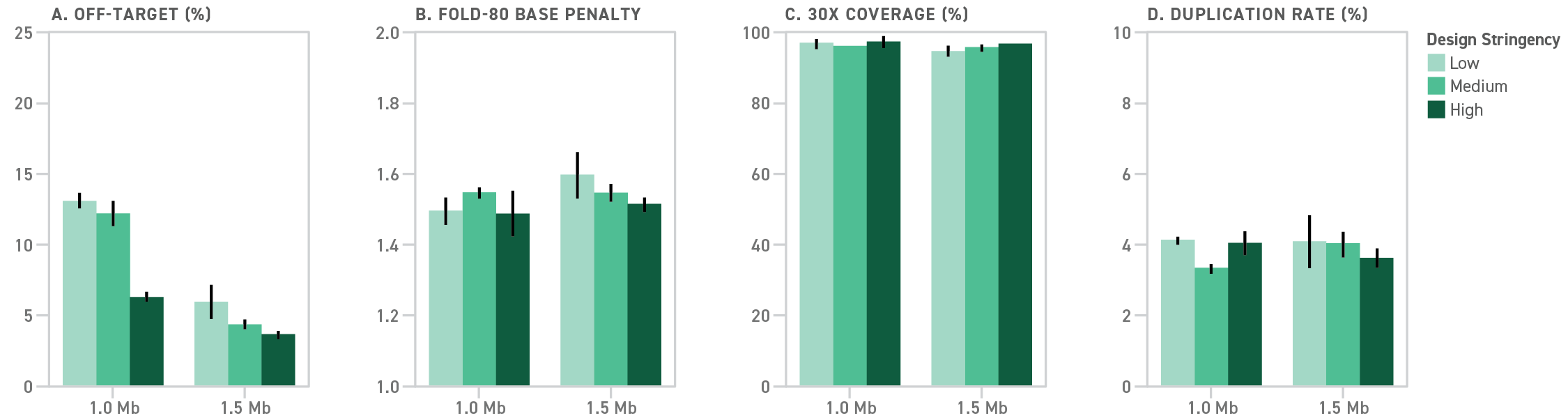
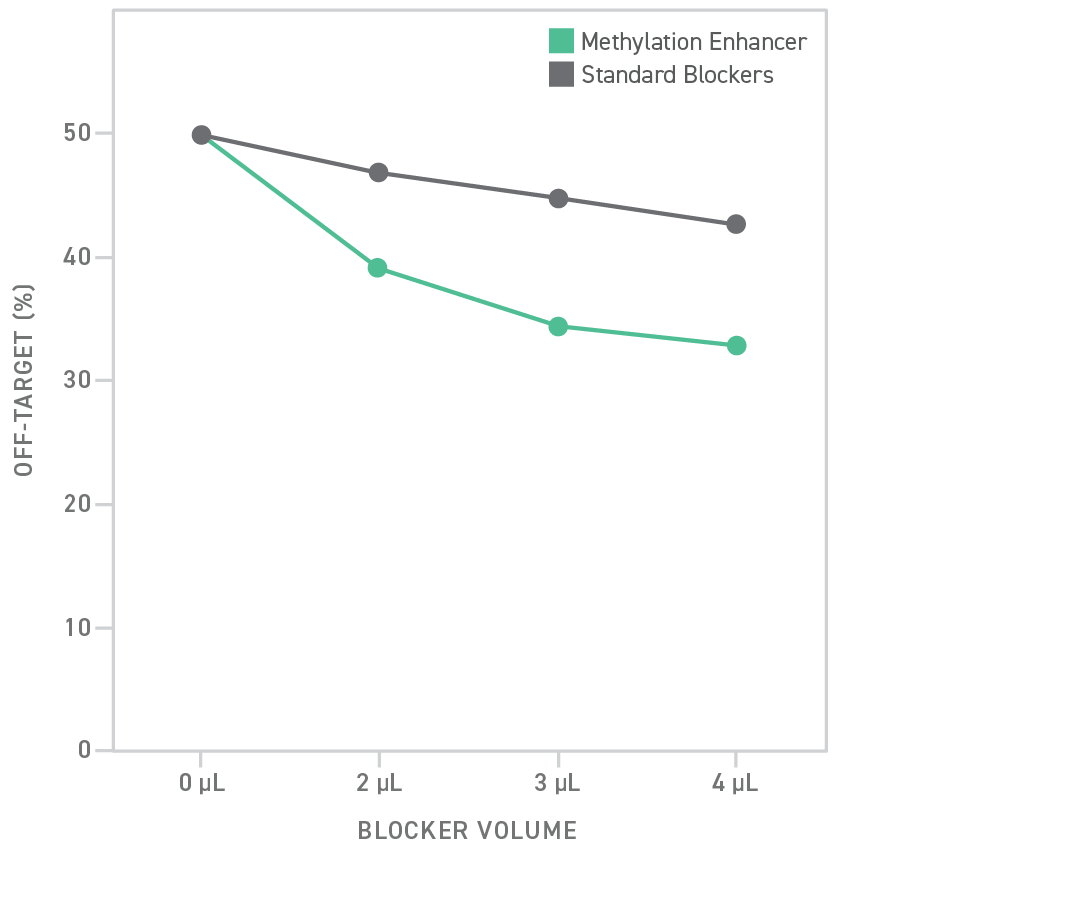
以下の表をご覧ください。
| パネルサイズ | カスタムパネル | カスタムメチル化パネル |
| > 100 Mb | 5 | 8 |
| 50 ~ 100 Mb | 7 | 9 |
| 25 ~ 50 Mb | 8 | 10 |
| 10 ~ 25 Mb | 8 | 11 |
| 2.5 ~ 10 Mb | 9 | 12 |
| 1 ~ 2.5 Mb | 9 | 13 |
| 500 ~ 1,000 kb | 11 | 14 |
| 100 ~ 500 kb | 13 | 15 |
| 50 ~ 100 kb | 14 | 16 |
| < 50 kb | 15 | 17 |
最終的なライブラリ収量は 50~75 ng/μl と予測されます。収量は、スタート時のインプットの質に左右されます。
350 ~ 450 bp です。
最低で 10~20 ng、最高で 200 ng の高品質な DNA をお使いいただくことを推奨します。
200 ~ 300 bp です。
Twist は、メチル化変換を行ってライブラリを構築するアプリケーションでは物理的断片化のみを利用しています。
ハイブリッドキャプチャを最適化するために、以下の条件を変更可能です。
- ハイブリダイゼーション時間:推奨通り2時間から始めて、30 分~4時間の間で変更します。
- Fast Wash Buffer 1 Temperature – Start with 65°C, adjust between 63–66°C.
Methylated UMI Adapters
Yes; however, increases in library complexity may not be as dramatic as those seen with low input cfDNA.
はい。Twist メチル化 UMI はライブラリ調製ステップにおいて、そのまま置き換えて使用できます。
はい。ご購入後にご依頼いただけましたら、Twist のテクニカルサポートから UMI 配列をご提供可能です。サポート用のメールcustomersupport@twistbioscience.com
Yes, bioinformatic processing steps are outlined in the product sheet.
アクショナブル塩基 5 つとスキップ塩基 2 つです。
Twist Methylated UMI Adapters は、32 組のアダプターペアで構成されており、各アダプターには UMI 配列がインラインで組み込まれています。すなわち、UMI 配列はシーケンシングプライマーの結合部位の直後に位置しています。
ターゲットエンリッチメント
Twist Universal Blockers は、シングルおよびデュアルインデックス方式の Illumina® 社製 TruSeq® のライブラリキットと互換性があり、様々なバーコード/UMI の長さに対応しています。詳しくは、 Universal Blockers の製品シートをご覧ください。
ハイブリダイゼーションを行う際の DNA インプットの推奨量の上限は 4 μg です。それ以上 DNA 量が多くなると、ブロッカーの効率が低下し、オフターゲットリードが多くなる可能性があります。
NGS キットに含まれる Post-capture 増幅プライマーの配列は以下の通りです。
P5 プライマー:AATGATACGGCGACCACCGA
P7 プライマー:CAAGCAGAAGACGGCATACGA
Twist のプライマーの濃度は、各プライマーとも 10 μM です。Post-capture PCR における最終的なプライマー濃度は 0.5 μM です。
さらに詳しいご説明が必要な場合は、 お問い合わせ
Learn more about NGS Kits