



 Genes
Genes Oligo Pools
 NGS
NGS Variant Libraries
 Synthetic Controls
 Antibody Discovery
 IVDR Solutions





 Poster
 Article

Twist Bioscience HQ
681 Gateway Blvd
South San Francisco, CA 94080
Engineering Synthetic Multivalent VHH Antibodies at Scale

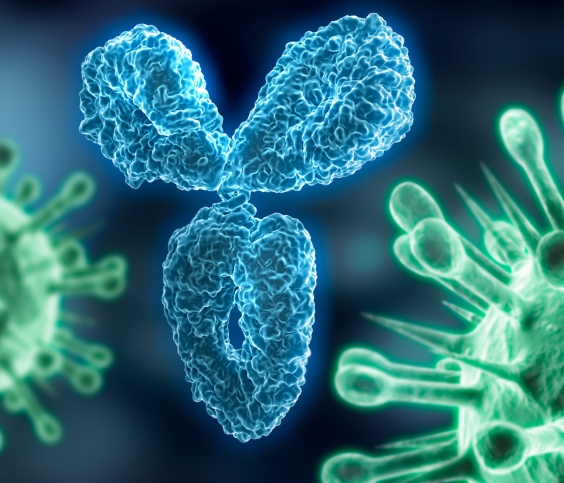
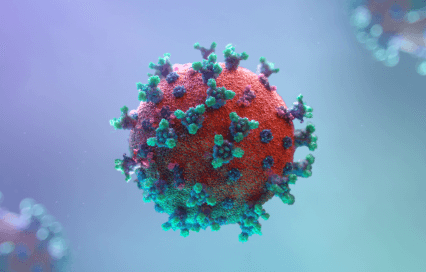
Antibodies must bind their targets with high avidity to effect therapeutic or diagnostic outcomes. The mammalian immune system can produce antibodies with micro- to nanomolar affinity through in vivo affinity maturation. In vitro display technologies have surpassed this affinity ceiling, enabling discovery of antibodies with picomolar and femtomolar affinities. In vitro display technologies offer immediate access to the antibody fragment genes, which can subsequently be multimerized to generate high-avidity antibody fusions. Among the available antibody formats, single-domain antibodies (VHH) are one of the most engineerable. VHH antibodies have many advantages including their increased thermostability, smaller- molecular weight, lower production cost, and modular format for building multivalent biologics. These advantages have encouraged many to prioritize VHHs when developing diagnostic and therapeutic antibodies against severe acute respiratory coronavirus 2 (SARS-CoV- 2), the etiological agent of the coronavirus disease 2019 (COVID-19) pandemic. Multivalent SARS-CoV-2 antibodies have been engineered more recently.
VHH antibodies can be sourced from immune, naïve, or synthetic antibody libraries. Immune and naive libraries require amplification from animal B cells, and are prone to redundancy and bias, which can limit library diversity. Synthetic libraries are based on computational in silico design and use synthetic oligos to introduce diversity. Using Twist’s unique silicon-based DNA synthesis platform, we have generated VHH libraries with high diversity (>1010), accuracy (1 error/2 kb), and productivity (> 80%). Recently, we reported the discovery of several high-affinity VHH-Fc antibodies against the SARS-CoV-2 S1 protein subunit from these libraries.
Unlike methods for the construction of synthetic antibody libraries, methods for screening multivalents are comparatively low throughput and ineffective for higher-order multivalent constructs where the number of possible permutations increases exponentially. Beginning with 13 anti- S1 VHH candidates, we constructed multivalent libraries of tandem-assembled VHHs, screened them by phage display, and sequenced the enriched libraries to determine the positional frequencies of each individual VHH fragment Using this pipeline, we engineered mono- and bispecific multivalent VHH-Fc constructs with higher affinity for S1 than their monovalent counterparts.