Coming soon
Full-length IgG in 5 business days, from cell-free expression.
Notify me

Be first to know

Express Screening Antibodies launch soon.
Leave your details and we’ll let you know the moment you can order.

How it works

Walk through our standardized workflow

1

Intake

Sequence submission and order configuration.

2

Gene synthesis

Synthesis, cloning into an antibody vector (from our catalog or we can onboard yours), and NGS verification.

3

Transient expression

Robust, reproducible protein production. Parallel expression across 96 deep well plates.

4

Purification

Protein A or His-tag batch purification of anitbodies. Purity, size, concentration, and yield data for every antibody.

5

QC & Characterization

Optional analytical SEC, endotoxin testing, binding, developability and custom assays available.

Characterization specs

Antibody Production

Antibodies shipped in as few as 5 business days

Performance data

HEK293 expression: VHH and IgG Panel

Reliable expression results you can use as an early indicator of developability.
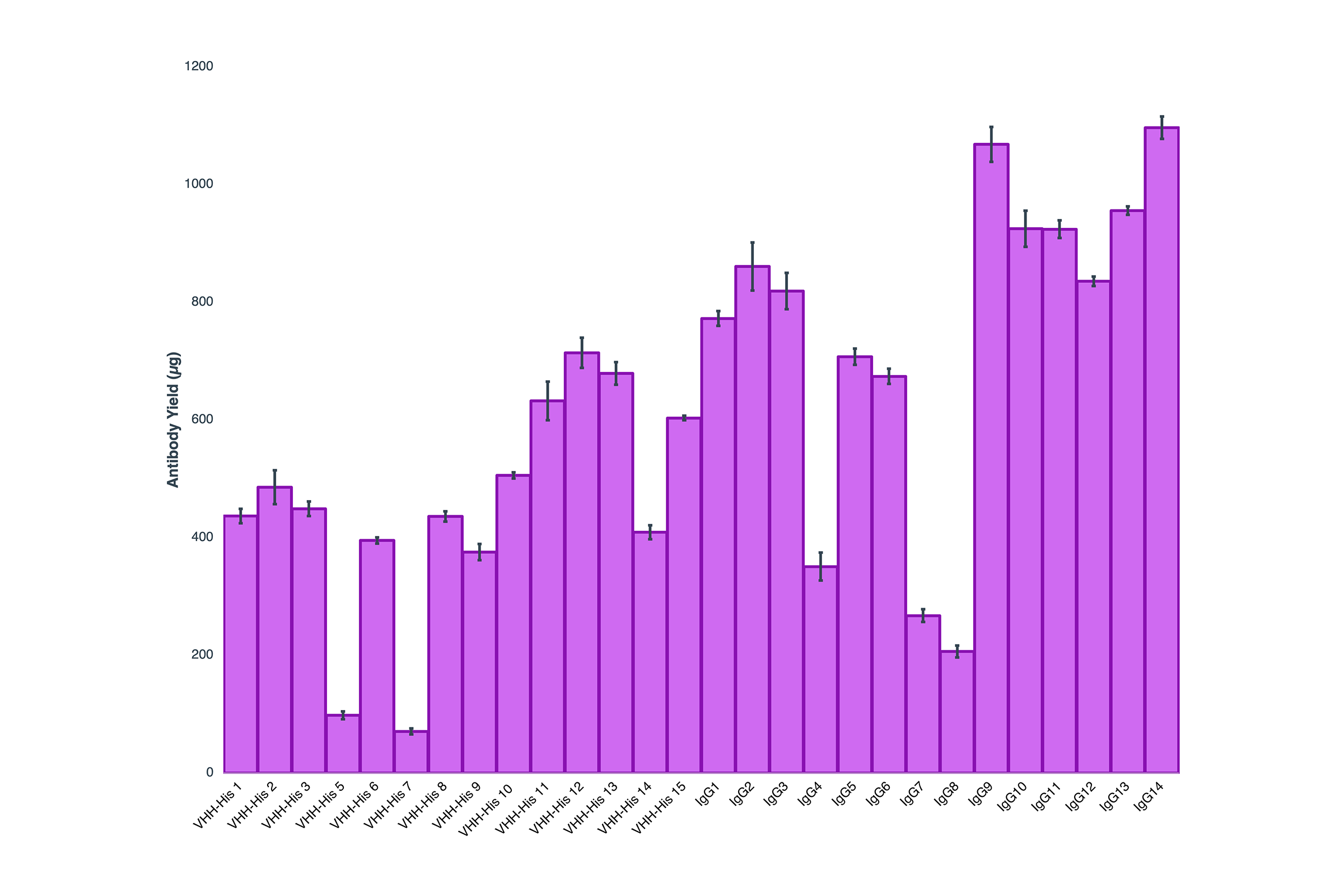
HEK293 expression: VHH and IgG Panel - Reliable expression results you can use as an early indicator of developability.<br /><br />A diverse panel of single-chain VHHs (Fc-fusion and 6xHis-tagged) and full-length IgGs from multiple discovery campaigns were expressed in Expi293™ cells to demonstrate expression variability. Antibodies were produced in 1.2 mL reactions, purified, and quantified by A280, with triplicate transfections ensuring reliable, plate-to-plate performance comparisons. Resize

CHO expression: VHH and IgG Panel

Predictable results whether your antibodies are experimental or clinically validated candidates.
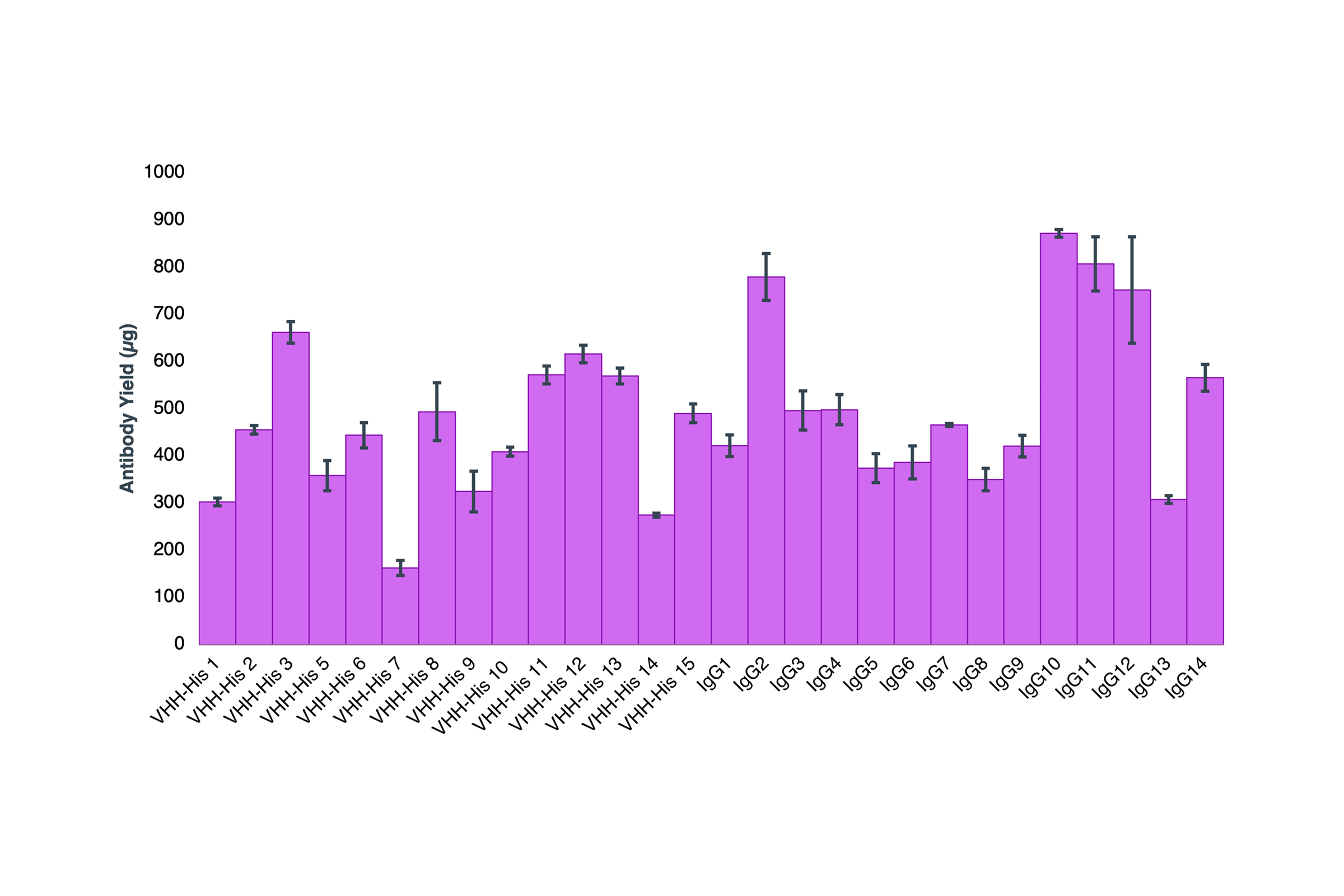
CHO expression: VHH and IgG Panel - Predictable results whether your antibodies are experimental or clinically validated candidates.<br /><br />The same antibody panel was expressed in ExpiCHO™ cells (1.2 mL scale) to demonstrate expression variability across constructs and purification types. Antibodies were purified and quantified by A280, with triplicate transfections enabling reliable plate-to-plate comparisons. Resize

Cell-free expression: SPR affinity validation

Binding kinetics of cell-free IgG measured by SPR alongside mammalian-expressed reference material, spanning four orders of magnitude in KD.
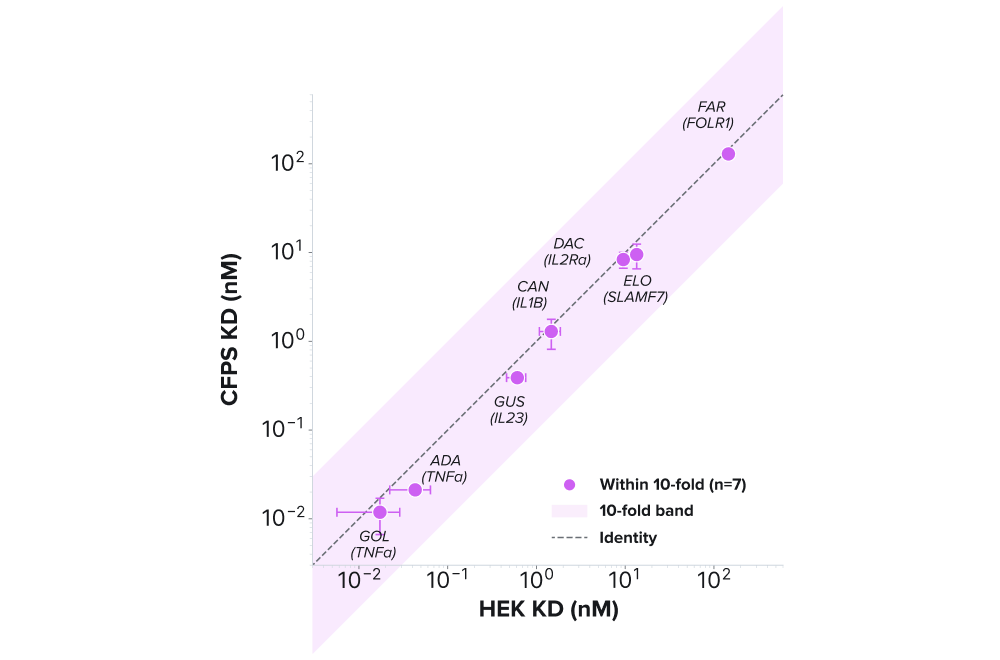
Cell-free expression: SPR affinity validation - Binding kinetics of cell-free IgG measured by SPR alongside mammalian-expressed reference material, spanning four orders of magnitude in KD.<br /><br />Cell-free-expressed IgG was assayed by SPR against HEK-expressed reference antibodies across a 7-antibody, 5-antigen subset, with each measurement run in triplicate (N=3). The two expression systems produced closely correlated KD values (Pearson r = 0.999, p < 10⁻⁷), with all 7 antibody/antigen pairs falling within a 10-fold concordance band and KD values ranging from 12.6 pM up to the low hundreds of nM. Resize

Quality antibodies for discovery

Trust your data from the start. Our antibodies deliver highly reproducible purity across every sample, verified by CE-SDS, so your results are built on a foundation of quality.
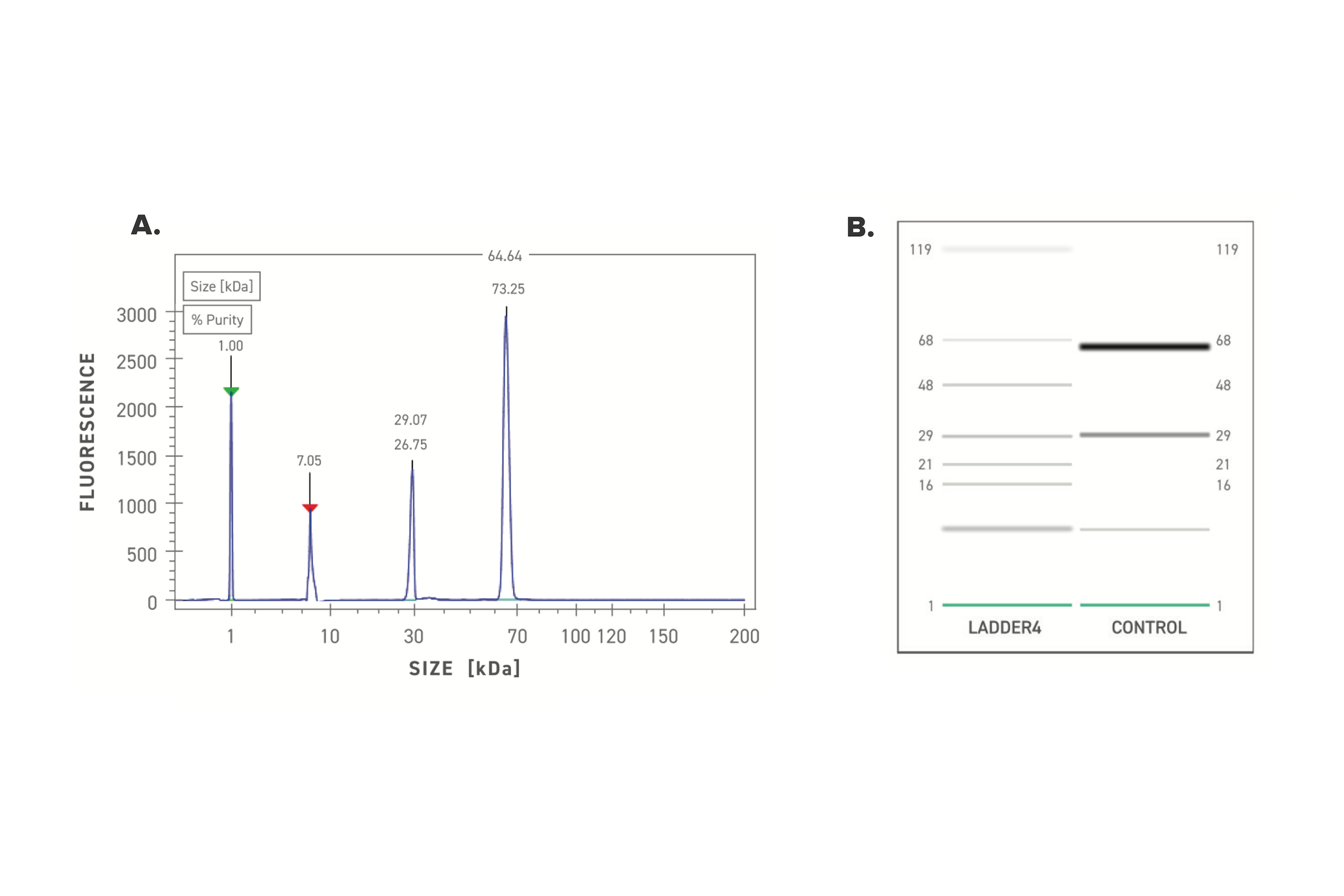
Quality antibodies for discovery - Trust your data from the start. Our antibodies deliver highly reproducible purity across every sample, verified by CE-SDS, so your results are built on a foundation of quality.<br /><br />To ensure that antibodies are ready for experimentation “out of the box”, quality control (QC) of purified antibodies includes A280 quantitation, size (kDa) and percent purity analysis with a denatured capillary electrophoresis sodium dodecyl sulfate (CE-SDS) assay. After passing QC, the antibody is prepared for shipping unless buffer exchange or other downstream processing is requested. Shown below are typical QC results generated using Twist's High Throughput Antibody Production workflow. The clean peaks in (A) and bands in (B) show that species within the antibody stock are all of similar size and charge. The peak at 67 kD represents the heavychain segment of the antibody, while the peak at 29 kD represents the light-chain segments. Resize

How to order

Order antibodies, data, or both

1

Configure order preferences

2

Download sequence template

3

Upload sequences & submit

Ready to get started?

Start your design now or speak with an expert to scope your project.

Start order
Talk to an expert

Antibody Characterization

Characterization data in as few as 8 business days

Talk to an expert

Antibody characterization assays

The prices (per sample) and turnaround times shown are in addition to antibody production and
may vary based on volume. Start an order to get a real-time quote for antibodies and/or
characterization data.
Binding assessment (6)
See comprehensive pricing table
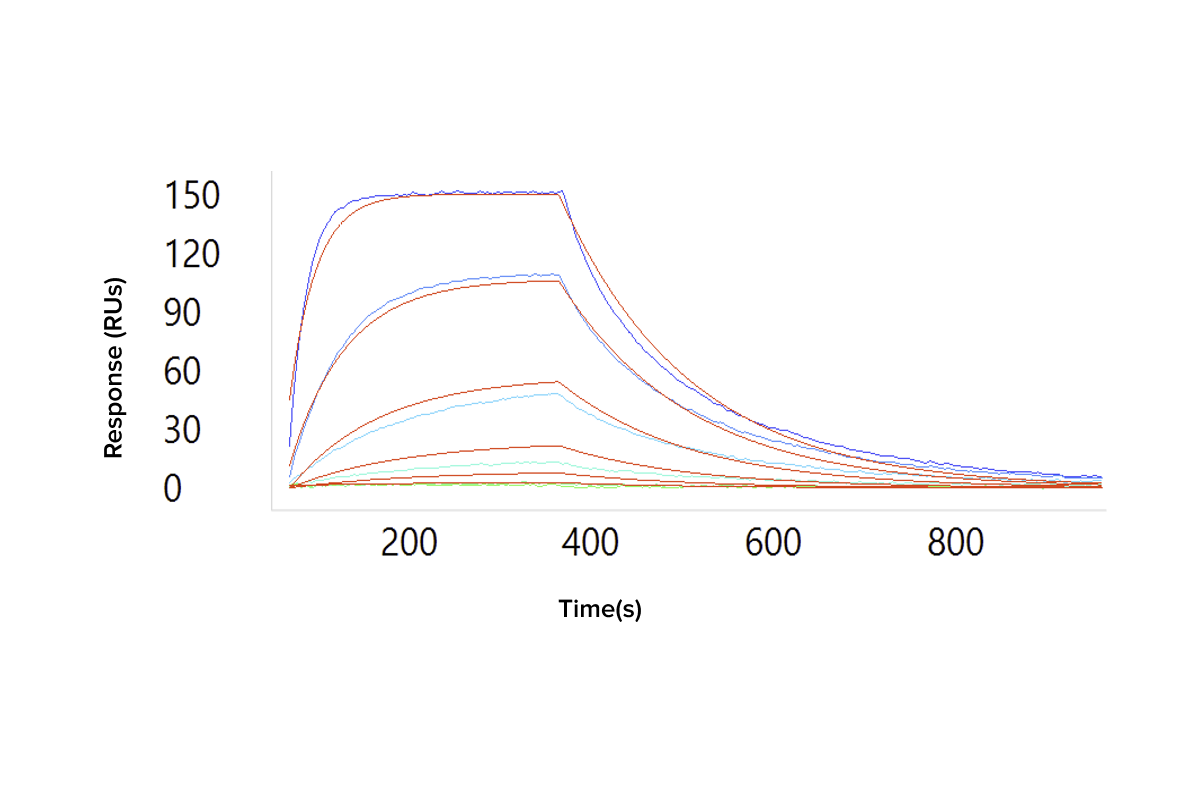
Affinity Determination by SPR - Determine full binding kinetics (ka, kd, KD) for large antibody panels using high-throughput surface plasmon resonance.
KD Affinity Determination by SPR

Determine full binding kinetics (ka, kd, KD) for large antibody panels using high-throughput surface plasmon resonance.

Starting at $80
From 3 business days
Affinity Determination by SPR - Determine full binding kinetics (ka, kd, KD) for large antibody panels using high-throughput surface plasmon resonance.
Platform Carterra LSA SPR
Compatibility VHH, scFv, Fab, VHH-Fc, IgG
Method Multi-concentration kinetic titration; globally fit to 1:1 Langmuir model
Output ka (M⁻¹s⁻¹), kd (s⁻¹), KD (M); iso-affinity plot (ka vs kd)
Format 96-well or 384-well
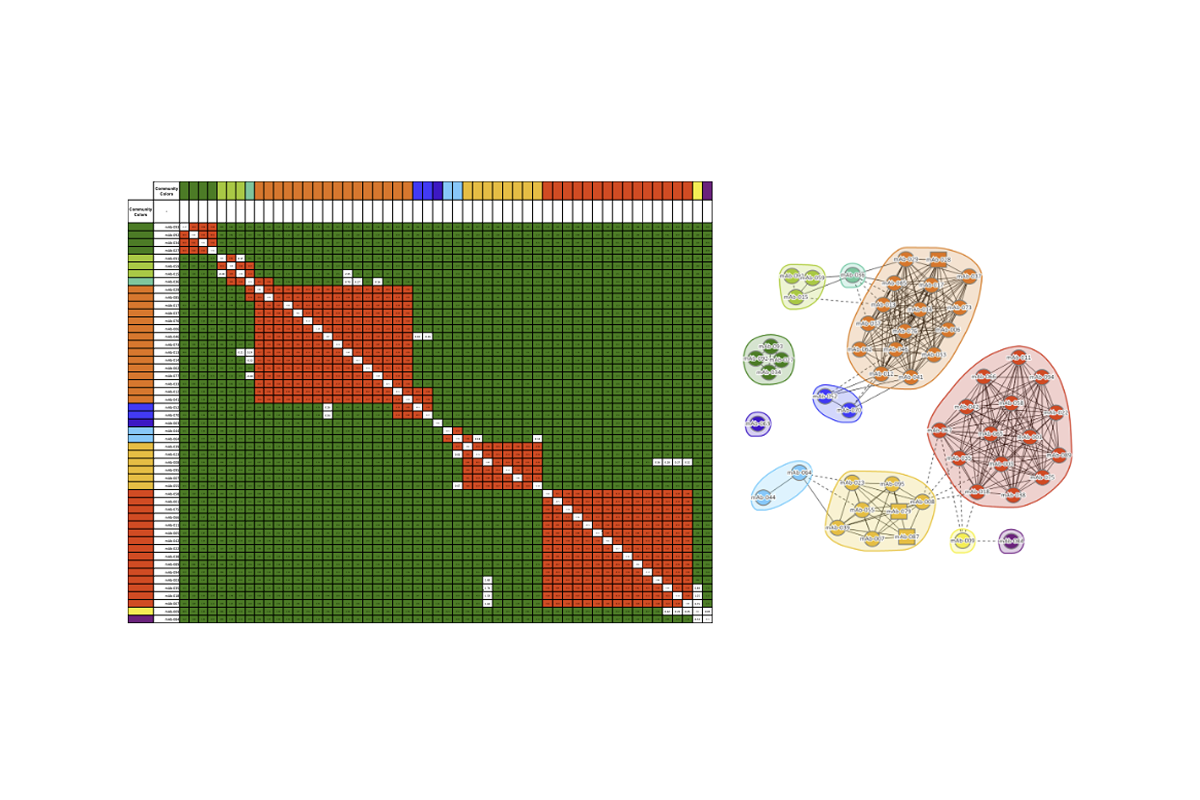
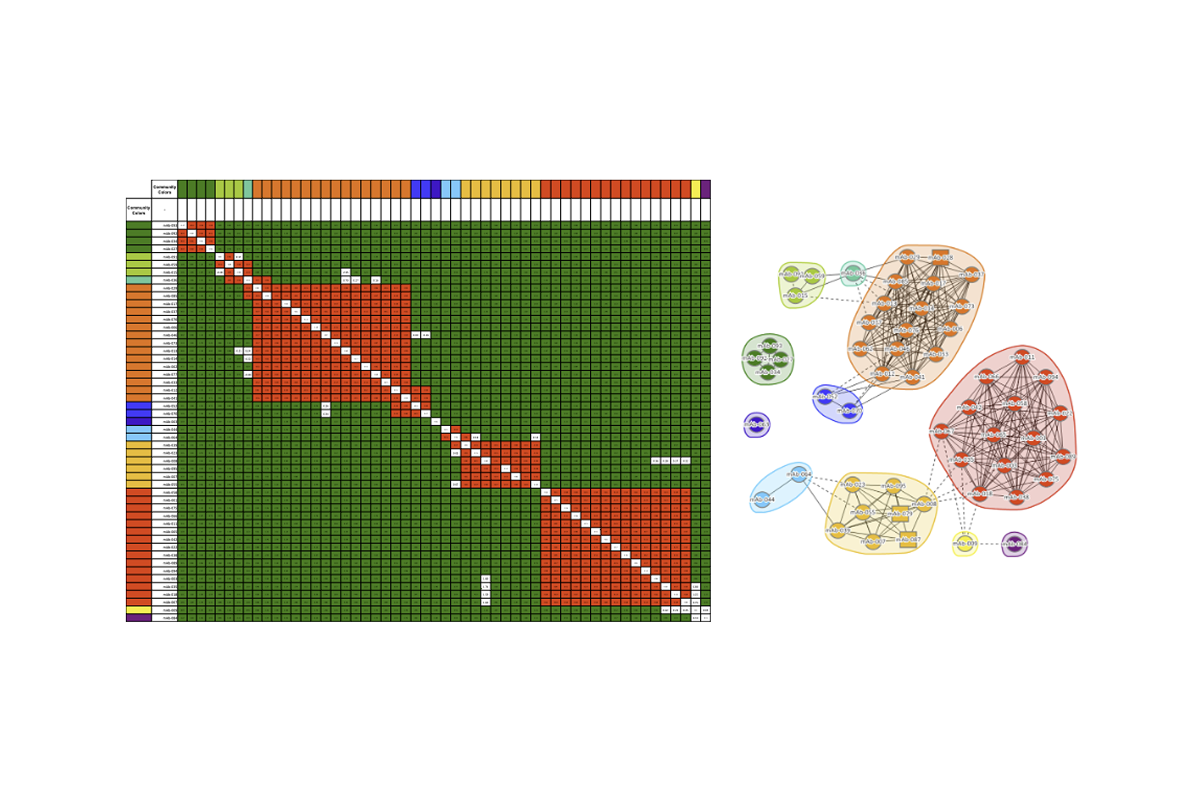
Epitope Binning by SPR - Map competitive binding relationships across large antibody panels to identify epitope families and guide lead selection.
Epitope Binning by SPR

Map competitive binding relationships across large antibody panels to identify epitope families and guide lead selection.

Starting at $140
From 5 business days
Epitope Binning by SPR - Map competitive binding relationships across large antibody panels to identify epitope families and guide lead selection.
Platform Carterra LSA SPR
Compatibility VHH, scFv, Fab, VHH-Fc, IgG
Method Tandem competitive binding; pairwise blocking matrix
Output Blocking matrix heatmap + epitope cluster dendrogram; bins up to 192 x 192 interactions
Format 96-well
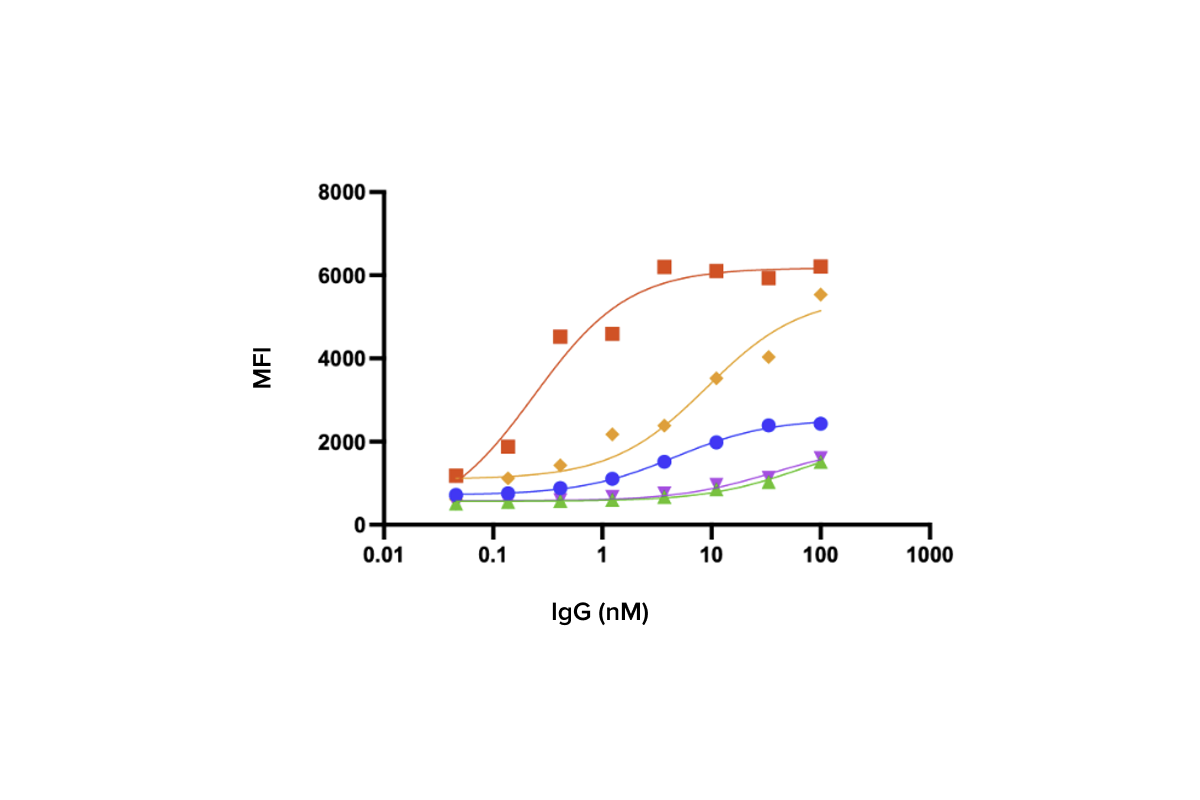
On-Cell Binding Confirmation by Flow Cytometry - Confirm target engagement on cells expressing native antigen. Generates dose-response binding curves for ranking.
On-Cell Binding Confirmation by Flow Cytometry

Confirm target engagement on cells expressing native antigen. Generates dose-response binding curves for ranking.

Starting at $160
From 5 business days
On-Cell Binding Confirmation by Flow Cytometry - Confirm target engagement on cells expressing native antigen. Generates dose-response binding curves for ranking.
Platform High-throughput flow cytometry
Compatibility VHH, scFv, Fab, VHH-Fc, IgG
Method Single- or multi-point titration on target-expressing cell lines
Output MFI vs IgG (nM) dose-response curve
Format 96-well
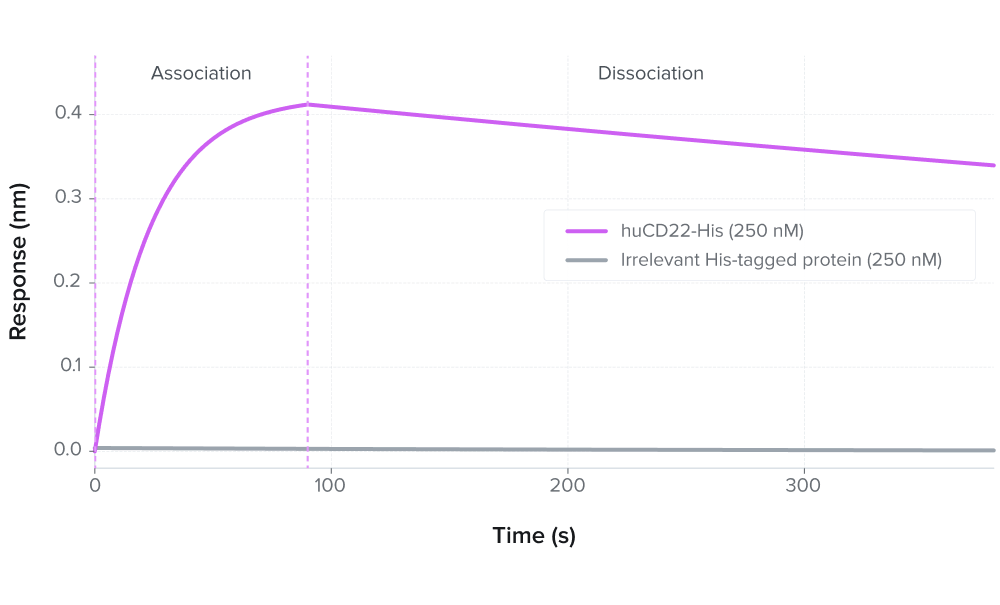
Single-Point Kinetics by BLI- Rapidly confirm target engagement across large antibody panels at a single concentration. Used for early-stage hit triage before committing to full kinetic analysis.
Single-Point Kinetics by BLI

Rapidly confirm target engagement across large antibody panels at a single concentration. Used for early-stage hit triage before committing to full kinetic analysis.

Starting at $55
From 3 business days
Single-Point Kinetics by BLI- Rapidly confirm target engagement across large antibody panels at a single concentration. Used for early-stage hit triage before committing to full kinetic analysis.
Platform Octet (Bio-Layer Interferometry)
Compatibility VHH, scFv, Fab, VHH-Fc, IgG
Method Single-concentration binding confirmation; reference-subtracted association and dissociations
Output Binding response (nm shift); binders vs non-binders classification
Format 96-well
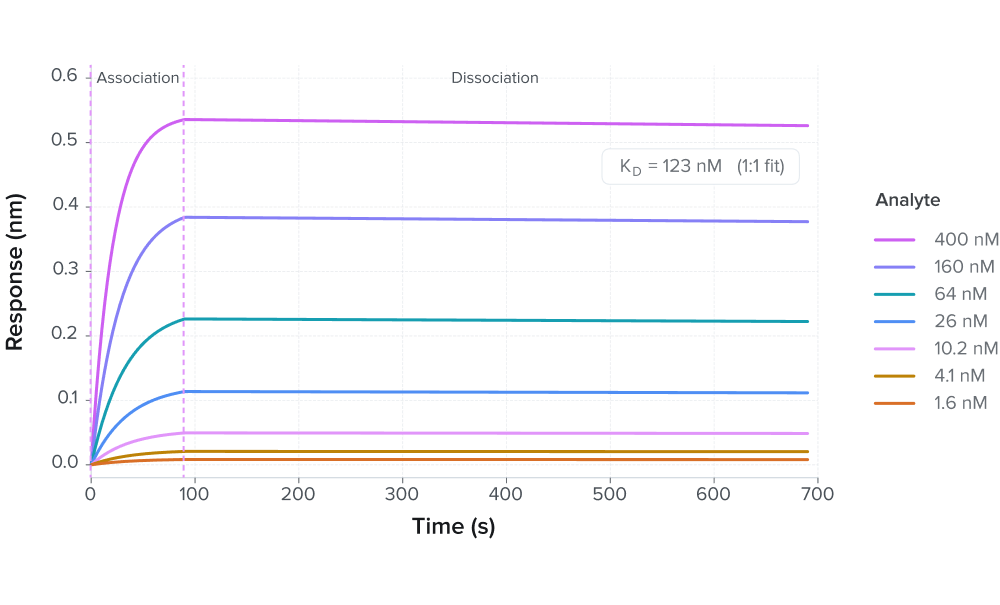
Affinity Determination by BLI - Determine full binding kinetics and affinity constants across a concentration series. Orthogonal to SPR for candidate confirmation or programs where SPR is not suitable.
KD Affinity Determination by BLI

Determine full binding kinetics and affinity constants across a concentration series. Orthogonal to SPR for candidate confirmation or programs where SPR is not suitable.

Starting at $100
From 3 business days
Affinity Determination by BLI - Determine full binding kinetics and affinity constants across a concentration series. Orthogonal to SPR for candidate confirmation or programs where SPR is not suitable.
Platform Octet (Bio-Layer Interferometry)
Compatibility VHH, scFv, Fab, VHH-Fc, IgG
Method Multi-concentration kinetic titration; globally fit to 1:1 Langmuir model
Output ka (M⁻¹s⁻¹), kd (s⁻¹), KD (M); sensorgram overlay
Format 96-well
Epitope Binning by BLI - Map competitive binding relationships to identify epitope diversity and guide lead selection. Suitable for panels where SPR throughput is not required.

Epitope Binning by BLI

Map competitive binding relationships to identify epitope diversity and guide lead selection. Suitable for panels where SPR throughput is not required.

Starting at $80
From 5 business days
Epitope Binning by BLI - Map competitive binding relationships to identify epitope diversity and guide lead selection. Suitable for panels where SPR throughput is not required.
Platform Octet (Bio-Layer Interferometry)
Compatibility VHH, scFv, Fab, VHH-Fc, IgG
Method Tandem sandwich competitive binding; pairwise blocking
Output Blocking matrix; epitope bin assignments
Format 96-well
See comprehensive pricing table

Document

Product specifications

Complete product details

Specification Value Details
Expression system HEK293 | CHO | Cell-free
Turnaround time HEK293: 8 – 11 BDs
CHO: 11 – 14 BDs
Cell-free: 5 BDs
Scale Add-on
  • 1 mL (Purified / Supernatant)
  • 4 mL (Purified)
  • 8 mL (Purified / Supernatant)
  • 24 mL (Purified)
  • 8 mL: +1 business day
  • 24 mL: +4 business days
Average yield

HEK293

  • 1 mL: 180 µg
  • 4 mL: 550 µg
  • 8 mL: 860 µg
  • 24 mL: 2,580 µg

CHO

  • 1 mL: 95 µg
  • 4 mL: 486 µg
  • 8 mL: 670 µg
  • 24 mL: 2,0101 µg

Cell-free

  • 0.05 mL: 5 – 10 µg
  • 0.10 mL: 5 – 25 µg
For antibody-only orders. Delivered yield is lower for orders that include characterization assays.
Average purity

HEK293 | CHO:

  • Most formats: ~95%
  • Bispecifics: ~85%

Cell-free:

  • Most formats: ~70%
For purified antibodies. Not measured for supernatant antibodies.
Purification
  • None (Supernatant; Fc-tag)
  • Protein A (Fc-tag)
  • Nickel (His-tag)
Elution buffer
  • 83 mM glycine, 167 mM Tris-HCl, pH 6.0
  • 43 mM sodium citrate, 147 mM HEPES, pH 6.0 (amine-free)
  • 10 mM HEPES, 150 mM NaCl, pH 7.0
Buffer exchange also available.
Buffer exchange Add-on
  • DPBS pH 7.4
  • PBS pH 6
+1 business day
Normalization Add-on

HEK293

  • 1 mL: 0.5 – 1 mg/mL
  • 4 mL: 1 – 2 mg/mL
  • 8 mL: 1 – 2 mg/mL
  • 24 mL: 1 – 3 mg/mL

CHO

  • 1 mL: 0.5 – 1 mg/mL
  • 4 mL: 0.5 – 1 mg/mL
  • 8 mL: 0.5 – 2 mg/mL
  • 24 mL: 1 – 3 mg/mL

Cell-free

  • 0.10 mL: 0.5 µg
+1 business day
Sterile filtration Add-on 0.2 µm filtration
Aliquoting Add-on

Purified (µL)

  • 1 mL: 2x100
  • 4 mL: 2x400 | 3x300 | 4x200 | 6x100
  • 8 mL: 2x400 | 3x300 | 4x200 | 6x150
  • 24 mL: 2x800 | 3x500 | 4x400 | 5x300 | 6x250 | 8x200

Supernatant (µL)

  • 1 mL: 2x400
  • 8 mL: 2x3,500 | 4x1,750
Delivery format Suspended in solution Buffer options are listed above in Elution buffer and Buffer exchange.
Container
  • 96 deep-well plate
  • 2 mL tube
  • 10 mL tube
  • 1.4 mL Micronic tube
  • 4 mL Micronic tube

Available for all orders except:

  • 1.4 mL Micronic tube: unavailable for purified protein at 24 mL scale
  • 10 mL tube: available only for supernatant protein at 8 mL scale

Specification Value Details
Product format Antibodies ScFv, VHH, VHH-His, IgG, Fab, VHH-Fc, B-Body, KiH, Monovalent bispecifics
Length 0.3 kb – 5.0 kb
Complexity Low | Medium A sequence’s complexity score is based on the combined presence, frequency, and length of various features within the design of a sequence. Impacts the ease and speed of production.
Codon optimization 100s of target organisms Large language model-driven for protein expression.

Specification Value Details
Vectors
  • 20+ catalog expression vectors
  • Unlimited custom vectors

View our catalog

One-time onboarding for new custom vectors with unlimited use thereafter.

Custom vector onboarding Add-on 10 business days Learn about custom vector onboarding
Glycerol stocks Included for all antibody production orders.

Every antibody we ship includes a Certificate of Analysis (COA) that contains the following information.

Specification Value Details
Purity % Purity Includes chain size(s) in kDa.
Purity and size verification Capillary electrophoresis SDS
Concentration ≥0.05 mg/mL
Concentration verification Ultraviolet-Visible spectroscopy
Analytical SEC (aSEC) Add-on Predicted target peak (%) and/or dominant peak (%) +2 – 3 business days
Endotoxin testing Add-on ≤4 EU/mg

Available for subsampling or entire order.

+2 business days

Turnaround times do not include antibody production and vary based on the number of samples.

Assay Value Details
Effective concentration at 50% binding affinity - EC50 EC50 value

Available platforms:

  • Flow cytometry
  • ELISA

5 – 10 business days

Epitope binning
  • Heatmap
  • Binning communities

Available platforms:

  • BLI (Octet)
  • SPR (Carterra LSA)

5 – 10 business days

Kinetic dissociation binding affinity (KD affinity) - single-point / multi-point
  • KD (M)
  • ka (M-1s-1)
  • kd (s-1)

Available platforms:

  • BLI (Octet)
  • SPR (Carterra LSA)
  • Flow cytometry
  • ELISA

3 – 15 business days

Single-point binding confirmation Yes / no

Available platforms:

  • Flow cytometry
  • ELISA

5 – 10 business days

Available for HEK293 and CHO expression systems. Turnaround times do not include antibody production and vary based on the number of samples.

Assay Value Details
Affinity-Capture Self-Interaction Nanoparticle Spectroscopy (AC-SINS)
  • λ (nm)
  • λ0 (nm)
  • λmax (nm)
2 – 5 business days
Baculovirus particle (BVP ELISA) OD 3 – 5 business days
Cross-Interaction Chromatography (CIC)
  • RT (minutes)
  • ΔRT (minutes)

Available in plate-based format.

1 – 10 business days

Dynamic Light Scattering (DLS)
  • PDI
  • Rh (nm)

Available as an add-on to nanoDSF.

2 – 5 business days

Hydrophobic Interaction Chromatography (HIC) RT (minutes)

Available formats:

  • Plate-based: 1 – 5 business days
  • Column-based: 5 – 10 business days
Nano Differential Scanning Fluorimetry (nanoDSF)

Default:

  • Tm

With DLS:

  • Tm
  • Tagg
  • Tonset

Available with or without DLS.

2 – 5 business days

Ovalbumin (OVA) RFU

Available in plate-based format.

1 – 10 business days

Assay Value Details
Intact mass spec Add-on
  • Expected (Da)
  • Observed (Da)
  • Δ mass (Da)
5 business days
Functional cell-based assays Contact us
Custom assay development Contact us

Our antibodies and services are just one part of the workflow

Pair our high-throughput antibodies and services with a full range of versatile Twist solutions.

FAQ

General

Does Twist supply prepped DNA along with purified or supernatant antibodies?

Twist supplies clonal gene glycerol stocks from the clonal genes synthesized for antibody production. During antibody production, the DNA is consumed for transfection; however, glycerol stocks are reserved and delivered along with the antibodies post-production. Please see our protocol for preparing fresh DNA from glycerol stocks.

What does a leader (signal peptide) sequence do and what leader sequence do we use in our pTwist vectors?

A leader or secretory signal sequence acts as a peptide signal bound by cellular machinery early in the translation process. This allows for the correct localization of the translation complex to the endoplasmic reticulum where the antibody chains can enter into the secretory pathway for protein assembly and secretion from the cell. The leader sequence is cleaved during the protein assembly process and is not a part of the final protein. Twist recommends the following leader sequence for both heavy and light chains when using our pTwist IgG expression vectors as these sequences have been tested and validated with our pTwist vectors in both Expi293™ and ExpiCHO™ cell lines:

VH: MRAWIFFLLCLAGRALA

VL: MRAWIFFLLCLAGRALA

What is a Kozak sequence, and what is the Kozak sequence used when I select "Twist sequence" during antibody design

The Kozak sequence directs the pre-initiation complex (PIC) and ribosome to the translation initiation site (start codon) and mediates ribosome assembly ensuring the correct protein sequence is translated.

The consensus Kozak sequence is generally considered as GCCGCCACCATGG, where ATG is the start codon (typically the start of the signal sequence). Twist recommends the version GCCGCCACC upstream of the start codon ATG.

I am receiving my samples in media as Supernatants, how do I purify my antibodies?

You can use a Protein A or G solid phase to purify, which binds to the FC region of the antibodies, depending on species and isotype of IgG. Alternatively, you can use immobilized antigen (full length or short peptide antigen) to purify the antibodies. The method will depend on the downstream application and specificity of the antibody.

What strain of cells was used to produce these antibodies?

Twist uses the industry standard cell lines, Thermo Fisher Scientific Expi293™ and Thermo Fisher Scientific ExpiCHO™

Can I have an antibody made with a custom Fc region such as IgG3 Fc, mutated IgG 1 Fc or other species such as mouse?

Customers may select the pTwist CMV BG WPRE Neo expression vector when they would like to use their own Fc region sequence (IgG3, Mouse IgG, or modified Fc) or have another type of Fc-fusion antibody to express.

Please remember to include a stop codon at the end of your coding sequence. If you have any design questions, please email igg@twistbioscience.com for help with your custom request.

Why are the C-terminal lysine residues missing from our IgG constructs?

Research has shown that C-terminal lysine residues of the heavy chain (present on all IgG isotypes) are cleaved off once the IgG is in circulation. Studies have also shown that there is no functional impact of the lysine once it's cleaved and its presence is actually inhibitory to allowing the antibody to reach full cytotoxicity potential: https://www.ncbi.nlm.nih.gov/pmc/articles/PMC4622059/

Why is the 10th positon cystein in our VHH-Fc fusion vectors mutated to a serine?

This cystein in a full IgG forms a disulfide bond with the LC constant region which is not present in the VHH-Fc fusion construct.

How should I upload my antibody sequences?

Please ensure you have the following sequence format for uploading variable regions:

  • Removed signal leader peptide (if using pTwist vectors + Twist recommended signal leader peptide)
  • Variable regions should not end with any CH1 starting sequence
  • Sequences are divisible by three if your ORF is in line with your insertion site

What is our pricing breakdown for custom antibodies?

You can find the pricing table for our custom antibody products in your account by clicking here.

If you need to contact your Account Manager regarding pricing, their contact information is available in eCommerce under Account.

Delivery Format

What formulation and buffer exchange options are available for antibody shipments?

Antibodies are typically supplied in standard commercial Phosphate-Buffered Saline (PBS). Depending on your application parameters, you can specify alternative pH preparations—such as PBS at pH 7.4 or custom configurations like PBS at pH 6.0—directly through the portal configuration window.

What are the expected delivery volumes and yields for the 1 mL and 8 mL production scales?

Final metrics vary based on individual antibody sequence expression characteristics. Standard yields break down across the following parameters:

  • 1 mL Scale: Delivers a final elution volume of approximately 220 µL, with target yields ranging from 15 µg to 300 µg.
  • 8 mL Scale: Delivers a final elution volume of approximately 750 µL, with target yields ranging from 15 µg to 3,000 µg.

What physical layout options and vial formats can be selected for final delivery?

To ensure seamless compatibility with downstream laboratory automation systems, microfluidics arrays, and fluid handlers, products can be specified in several array configurations:
  • 96-deep well plates featuring fully customizable grid array mapping.
  • 1.4 mL matrix-compatible micronic tube racks.
  • Individual specialized tubes available in 2 mL, 4 mL, or 10 mL capacities (10 mL tubes are optimized for large volume supernatant shipments).
Resources and guidance for sequence design
1
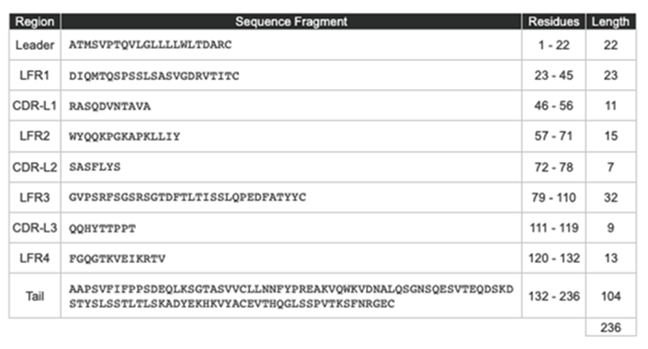
abYsis provides an integrated, comprehensive, and annotated sequence assessment for one or multiple antibodies. abYsis provides a thorough regional breakdown of antibody sequences to quickly identify where your variable region starts and ends. A tabular breakdown of the leader, FWK, and CDR sequences as well as the tail, or constant region sequence is also provided.
2
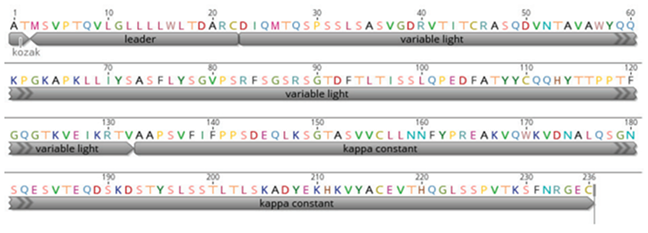
It can be helpful to apply the annotations provided by abYsis to your sequence using bioinformatic programs to help visualize and isolate your variable region. Below is an example of a sequence imported to the Geneious Prime software platform with abYsis annotations applied. Geneious Prime Software Geneious Prime
3
One additional option that may provide comprehensive breakdown of leader, variable, and constant regions is ANARCI. The resulting analysis provides the exact variable region sequence highlighted in red, which can then be uploaded to the Antibodies application on our eCommerce website. ANARCI also provides detail on the light chain domain type and the sequence species.
4
Please keep in mind that variable region sequences should never start with a methionine (M). If you are uploading sequences that start with the amino acid M, or nucleotides ATG, and are planning to use pTwist vectors, please contact our support for assistance.
5
Reformatting variable domains from one species to another can be complicated given differences between disulfide bonding and other features. By default, the Twist eCommerce platform will not correct any of these issues. We typically rely on you to account and inspect for these types of reformatting complications. If you need assistance, please contact our support team.

Consult with an expert

Collaborate with a scientific partner to guide your project specs. From bespoke data configurations to workflow design, get the support you need to reduce friction at every step.

Talk to an expert
View FAQs

For Research Use Only.

Not for Diagnostic Procedures.


Turnaround time (TAT) is defined as the period from order submission to delivery, in business days: HEK293 8–11 BD, CHO 11–14 BD, Cell-free 5 BD. All pricing in USD. Stated times reflect the fastest available configuration; actual TAT varies with format, order size and sequence complexity.