Twist Bioscience HQ
681 Gateway Blvd
South San Francisco, CA 94080

Targeted panel for detection and analysis of respiratory viral pathogens
Detect and characterize respiratory viruses with a targeted sequencing panel designed for high sensitivity and broad coverage of common respiratory pathogens. Enable surveillance, strain identification, and co-infection analysis with efficient target enrichment that reduces sequencing costs and improves data quality.

High-sensitivity viral detection
Detects low viral loads (as little as 100 copies of viral genome) with high enrichment (>99.9% genome coverage at 1X), enabling accurate identification even in challenging samples.

Focused respiratory pathogen coverage
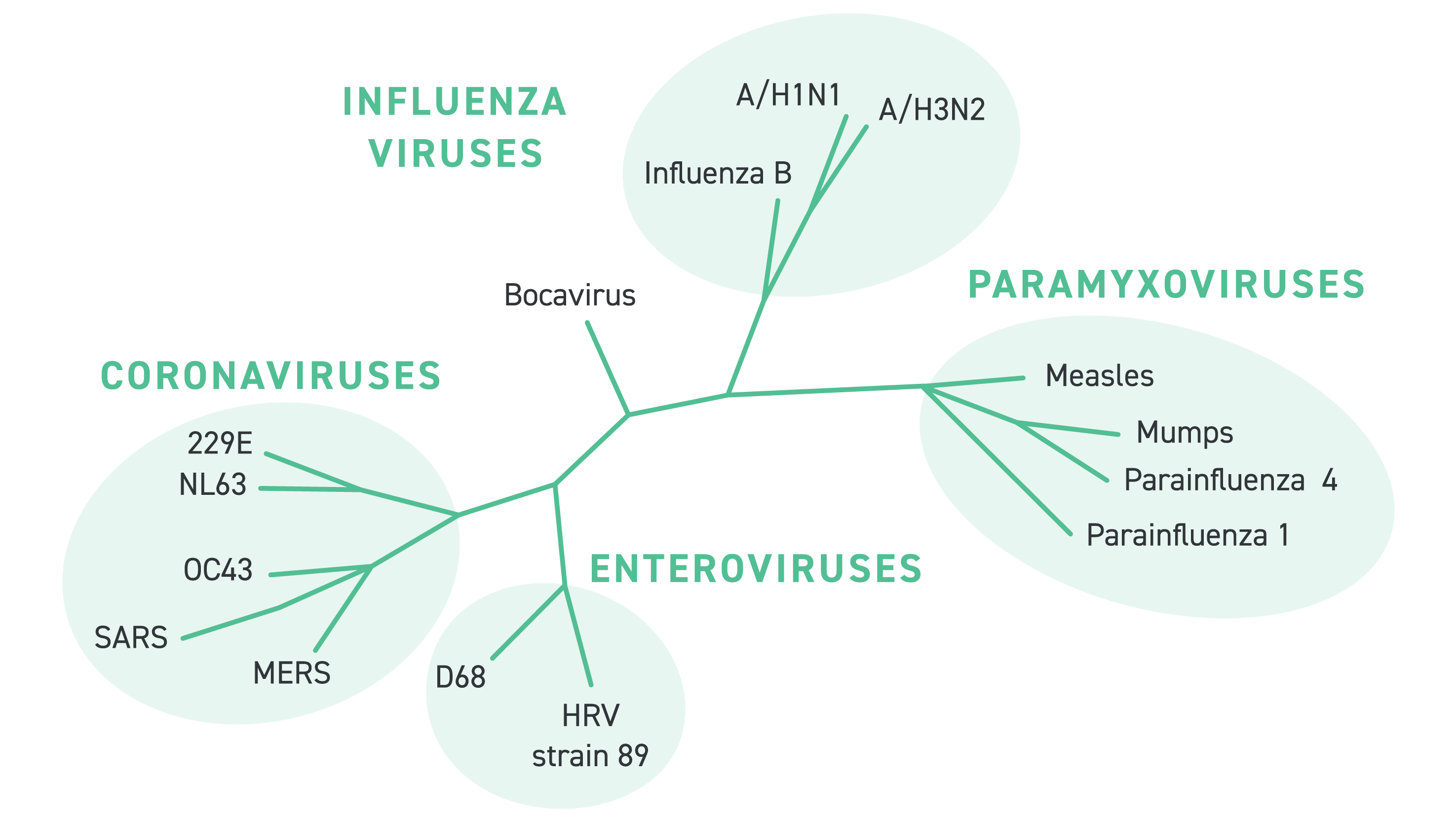
Targets influenza and non-influenza viruses to differentiate 29 respiratory viruses in a single assay. Add a custom spike-in panel to detect additional pathogens.

Publication-ready reports from OneCodex
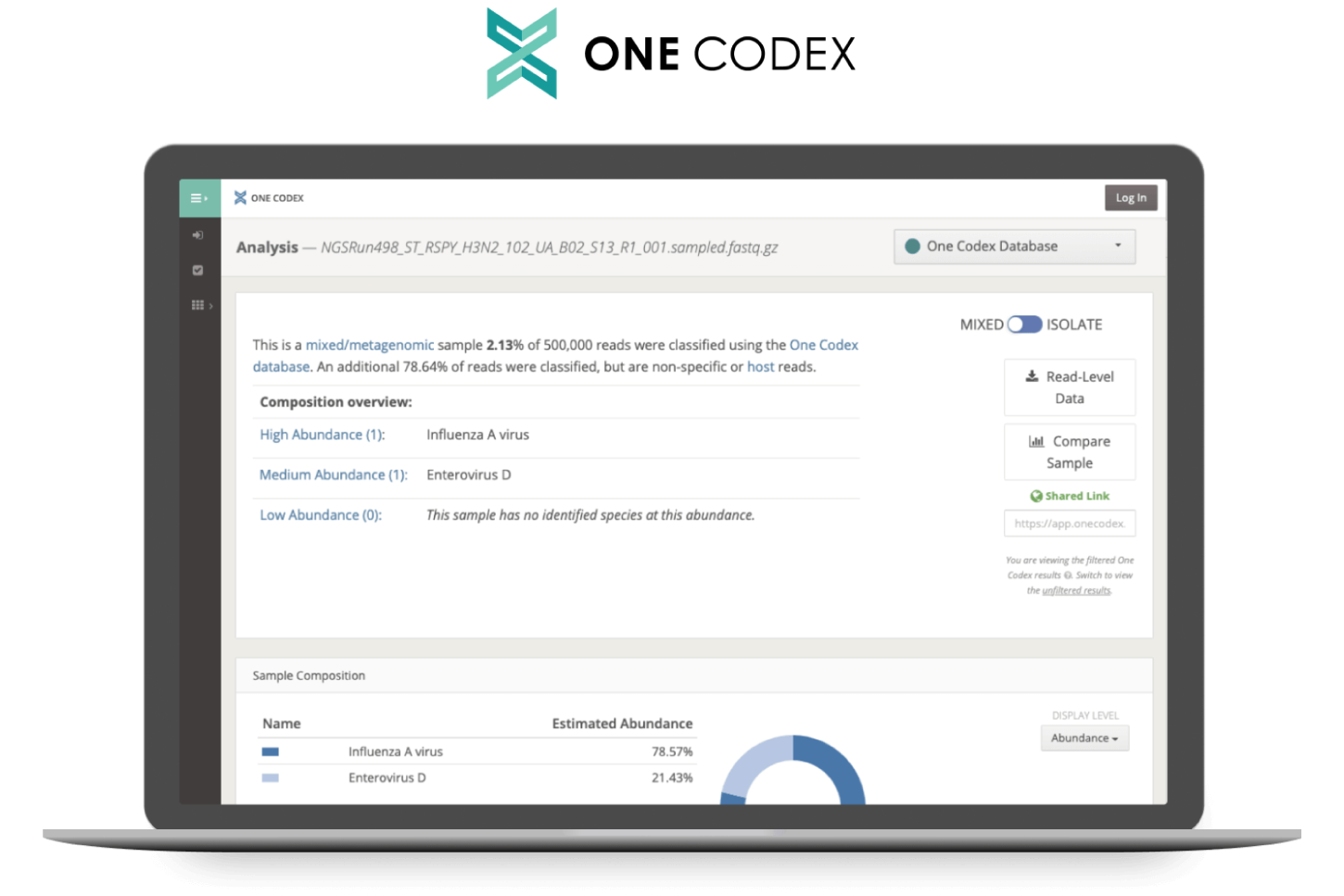
The analysis platform from One Codex generates reports with viral species identification, along with publication-ready visuals and other analysis tools.
Product data
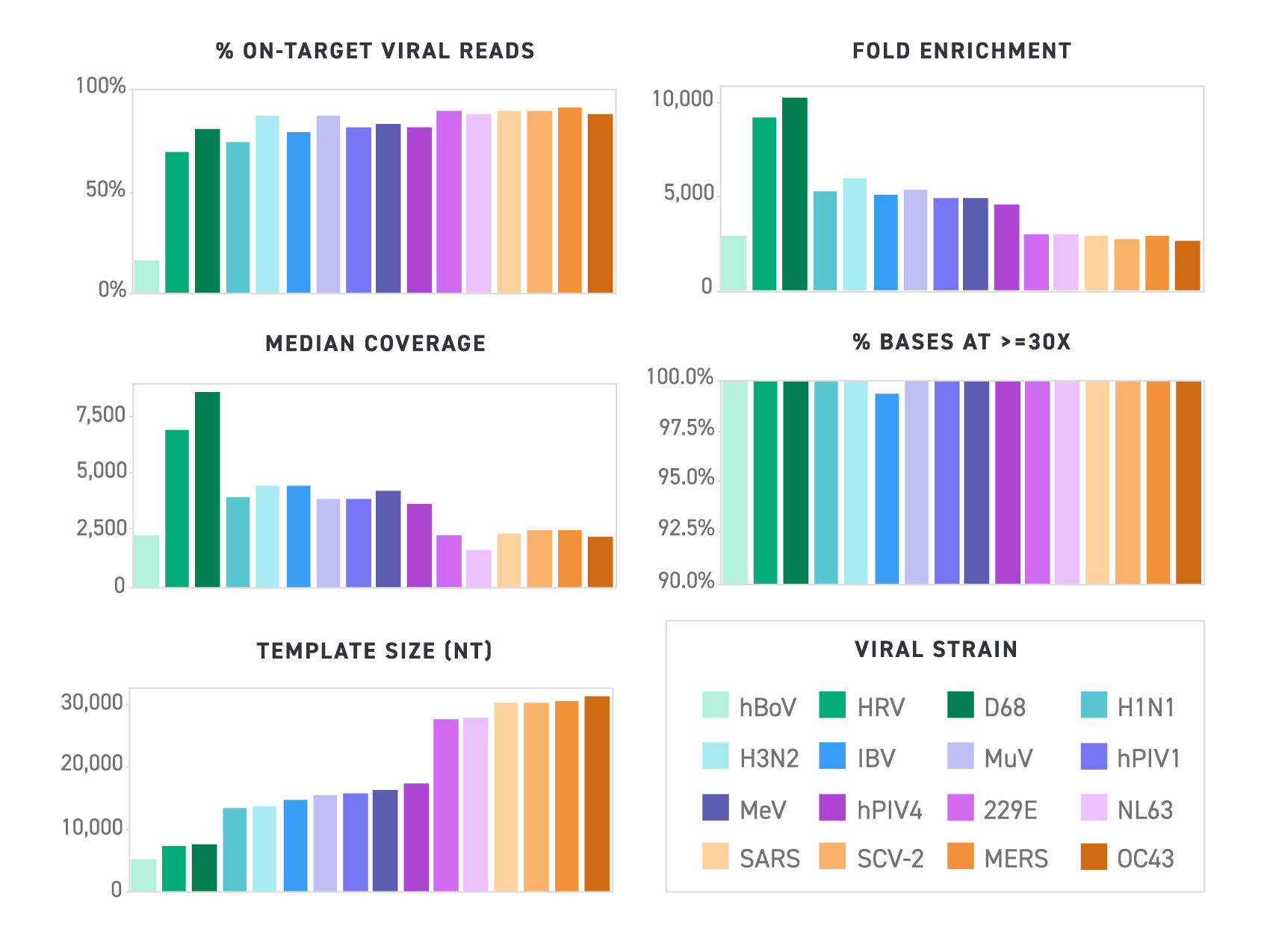
Each Twist Synthetic Viral Control was spiked into 50 ng of human carrier RNA at 1,000,000 copies prior to cDNA synthesis. For each standard, we show percent of on-target viral reads, fold enrichment above input, median coverage across the genome, the percent of bases with at least 30x coverage, and the template length. Viral genomes are ordered by template length (smallest to longest) among all genome segments. In most cases, we found that over 70 percent of reads came from viral genomes in these libraries, representing at least a 2500-fold enrichment over the spiked-in content.
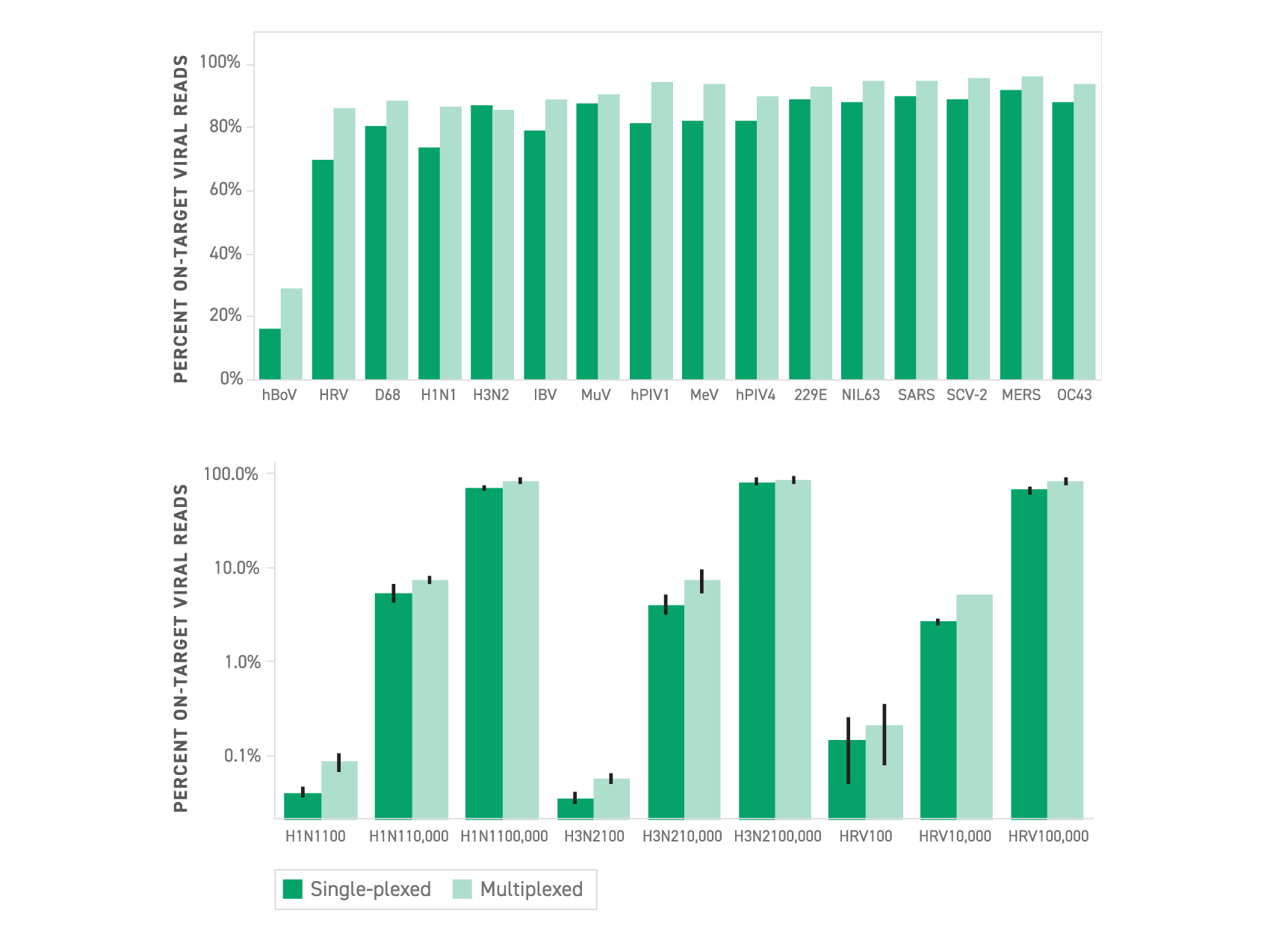
A comparison of the percent on-target viral reads captured using the Twist Synthetic Viral Controls at different viral titers, using a multiplex and single-plex hybridization reaction. The first graph shows comparisons using a multiplex and single-plex hybridization reaction using 1,000,000 copies per library, while the second graph shows a similar comparison using 100, 10,000, and 1,000,000 copies per library. Each viral control was captured using the Twist Standard Target Enrichment workflow and the Twist Respiratory Virus Research Panel. This data demonstrates that 8-plex capture gives comparable efficient enrichment as a single plex capture when using the Twist Respiratory Virus Research Panel.
Video
Viral enrichment across genome lengths
Each Twist Synthetic Viral Control was spiked into 50 ng of human carrier RNA at 1,000,000 copies prior to cDNA synthesis. For each standard, we show percent of on-target viral reads, fold enrichment above input, median coverage across the genome, the percent of bases with at least 30x coverage, and the template length. Viral genomes are ordered by template length (smallest to longest) among all genome segments. In most cases, we found that over 70 percent of reads came from viral genomes in these libraries, representing at least a 2500-fold enrichment over the spiked-in content.
Multiplex viral capture performance
A comparison of the percent on-target viral reads captured using the Twist Synthetic Viral Controls at different viral titers, using a multiplex and single-plex hybridization reaction. The first graph shows comparisons using a multiplex and single-plex hybridization reaction using 1,000,000 copies per library, while the second graph shows a similar comparison using 100, 10,000, and 1,000,000 copies per library. Each viral control was captured using the Twist Standard Target Enrichment workflow and the Twist Respiratory Virus Research Panel. This data demonstrates that 8-plex capture gives comparable efficient enrichment as a single plex capture when using the Twist Respiratory Virus Research Panel.
1 / 5
Viral enrichment across genome lengths
Each Twist Synthetic Viral Control was spiked into 50 ng of human carrier RNA at 1,000,000 copies prior to cDNA synthesis. For each standard, we show percent of on-target viral reads, fold enrichment above input, median coverage across the genome, the percent of bases with at least 30x coverage, and the template length. Viral genomes are ordered by template length (smallest to longest) among all genome segments. In most cases, we found that over 70 percent of reads came from viral genomes in these libraries, representing at least a 2500-fold enrichment over the spiked-in content.
Multiplex viral capture performance
A comparison of the percent on-target viral reads captured using the Twist Synthetic Viral Controls at different viral titers, using a multiplex and single-plex hybridization reaction. The first graph shows comparisons using a multiplex and single-plex hybridization reaction using 1,000,000 copies per library, while the second graph shows a similar comparison using 100, 10,000, and 1,000,000 copies per library. Each viral control was captured using the Twist Standard Target Enrichment workflow and the Twist Respiratory Virus Research Panel. This data demonstrates that 8-plex capture gives comparable efficient enrichment as a single plex capture when using the Twist Respiratory Virus Research Panel.

For Research Use Only. Not for use in diagnostic procedures.
This panel's design incorporates the use of the CATCH (Compact Aggregation of Targets for Comprehensive Hybridization) algorithm. For additional details on CATCH, please refer to Metsky HC and Siddle KJ et al. Capturing sequence diversity in metagenomes with comprehensive and scalable probe design. Nature Biotechnology, 37(2), 160–168 (2019). doi: 10.1038/ s41587-018-0006-x