



 Genes
Genes
 Oligo Pools
 NGS
NGS
 Variant Libraries
 Antibodies
 IVDR Solutions










Get the latest by subscribing to our blog
Physicians in the Democratic Republic of the Congo (DRC) are all too familiar with the dangers of viral hemorrhagic fevers. At first, the diseases’ early, non-specific symptoms (fatigue, muscle pain, fever) are easily mistaken for signs of more treatable infections, such as influenza or malaria. But as precious time ticks by, these symptoms are joined by potentially lethal bouts of vomiting, diarrhea, and disseminated mucosal bleeding. Paired with the diseases’ highly infectious nature, these outbreaks wash over communities with alarming speed and devastating impact, particularly when the causal virus eludes detection.
With at least four endemic families of hemorrhagic fever viruses in the DRC [1–4], the country’s physicians have learned that preparation and early detection is essential to quelling outbreaks. If researchers know what virus they’re dealing with, their ability to detect, treat, and quarantine it greatly increases. For exactly this reason, hospitals in the DRC prepare by stocking up on RT-PCR tests designed to detect common forms of viruses like Ebola [5–7]. But these preparations can never be perfect, and when they fail, a multinational crisis can ensue.
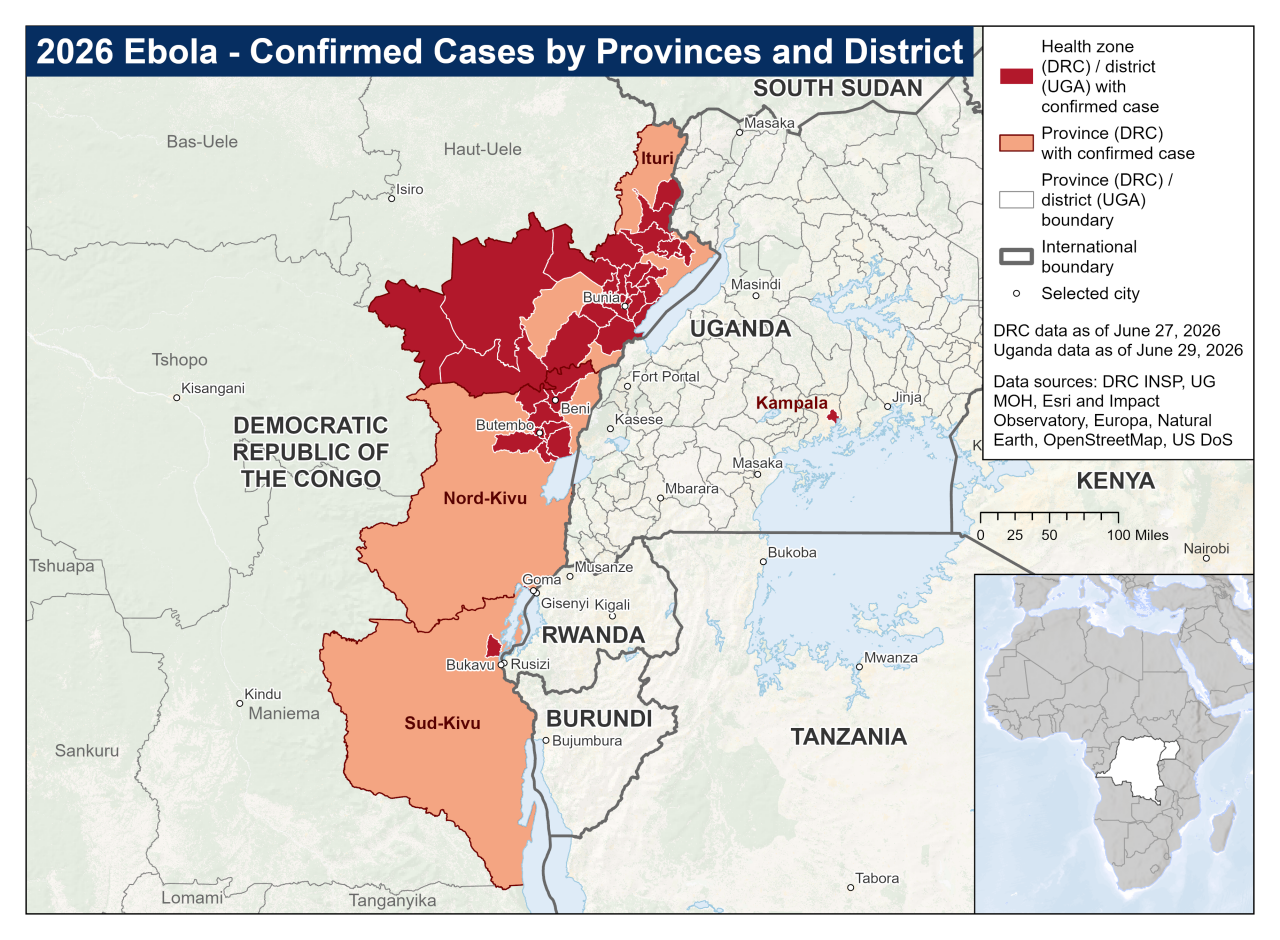
On May 15, 2026, public health officials in the DRC announced a developing outbreak of hemorrhagic fever, one that appears to have been spreading for at least a month before it was detected [8,9]. As of July 1st, the virus has been confirmed in both the DRC and Uganda, and is believed to have spread to multiple thousands of people, with at least 399 confirmed deaths [9].
Containing this outbreak will prove difficult for myriad reasons, not least of which being the virus’ unique genome [8,10]. Fortunately, a molecular net designed in 2019 has given today’s physicians and public health officials an edge, one that enabled the virus’ identification and may prove critical in the race to stop its lethal spread.
Why standard Ebola PCR tests failed to detect the virus
The constellation of symptoms and circumstances of this outbreak strongly suggested an Ebola virus [6]; a suspicion confirmed when researchers at DRC’s Institut National de Recherche Biomédicale (INRB) tested patient samples with a pan-Ebola PCR assay. Yet, problematically, another common RT-PCR test (GeneXpert Ebola) consistently failed to return positive results, indicating that the team was likely dealing with an unusual Ebola strain.
There are four species of Ebola known to infect humans, each differing from the others by roughly 30–40% at the genomic level [11]. This divergence means that, for PCR tests designed to sensitively detect a specific strain, the chances of failure are much higher.
“For diagnostic assays, PCR primers are designed to target a unique 20–30 base region in the virus’ genome,” explains Siyuan Chen, Chief Technology Officer at Twist Bioscience. “When there are unexpected mutations in that region, it can disrupt primer binding and lead to false negatives,” he continues. “Usually, that’s not a problem. Within a single species, viral genomes may differ by a few bases here and there, but it’s very unlikely that these base mutations will happen to fall within the primer binding site. When the genome is 30% different, though, the odds are much, much higher that binding sites will be disrupted.”
Since Ebola was first identified in 1976, DRC has experienced at least 16 outbreaks, 15 of which are attributed to the Zaire (Orthoebolavirus zairense) strain [12]. Across Africa, this form of the virus has caused many thousands of deaths, affecting mortality rates between 50–90% [11,13]. For this reason, hospitals in the DRC have focused on amassing PCR tests designed to sensitively detect the Zaire strain in the hopes of catching outbreaks early, when immunization and quarantine campaigns are most effective [5–7]. If these tests can’t recognize other forms of Ebola, however, infected individuals may be misdiagnosed, leading to their ineffective treatment and the virus’ potential spread.
Now, the country is in the midst of its 17th outbreak. Knowing that this one was caused by an Ebola virus that is likely to evade detection by common PCR tests, researchers in the DRC raced to identify the strain.
The role of genomic sequencing in identifying Bundibugyo Ebola
Using whole genome sequencing and Twist’s Comprehensive Viral Panel*, INRB researchers were able to capture the virus’s genetic material and identify it as the rare Bundibugyo Ebola strain (Orthoebolavirus bundibugyoense) [8]. This form of the virus had only been seen twice previously: once in 2007 when it was first identified in the Bundibugyo province of Uganda, and then again in 2012 during a brief hemorrhagic fever outbreak in eastern DRC [11,14,15].
Though the origin of the current outbreak remains unknown, it is very likely that the virus has been able to spread undetected for nearly a month because its genome differs considerably from the Zaire strain, reducing the odds that the country’s armament of PCR tests would detect it. Fortunately, knowing its true identity gives researchers an edge.
Chen emphasizes that “now that the world knows which species of Ebola is spreading, PCR vendors have the opportunity to refine point-of-care tests by designing probes that are specific to this strain.”
The identification of the Bundibugyo virus highlights an invaluable role for NGS in public health efforts. When PCR testing fails, NGS can be useful because it casts a wider, more exhaustive net in order to catch the pathogen’s genome. Not only does this help researchers identify unknown viruses, but it provides insights into the strain’s genomic nuances—nuances that can be exploited for test and vaccine development.
“Twist's panel helps researchers cut through the noise.”
However, NGS is not inherently selective. “Roughly 99.9% of the genetic material in these samples will be from the patient, not the virus,” Chen explains. “Without filtering, resources will be wasted as the bulk of the assay is dedicated to sequencing non-viral material.” Not only does this drive up the cost of the assay, but it reduces its ability to sensitively detect those rare bits of viral DNA.
Hybrid capture probes like those used in Twist’s panel help researchers cut through the noise by isolating targeted viral sequences. “The beauty of this approach is that it allows you to wash away the human background and focus on viral genetic material, giving you greater coverage and sensitivity,” Chen adds.
In 2019, researchers at Twist designed the Comprehensive Viral Panel with more than a million such probes, collectively targeting more than 3,000 viral species—including hantavirus, monkeypox, and the DRC’s four families of endemic hemorrhagic viruses.
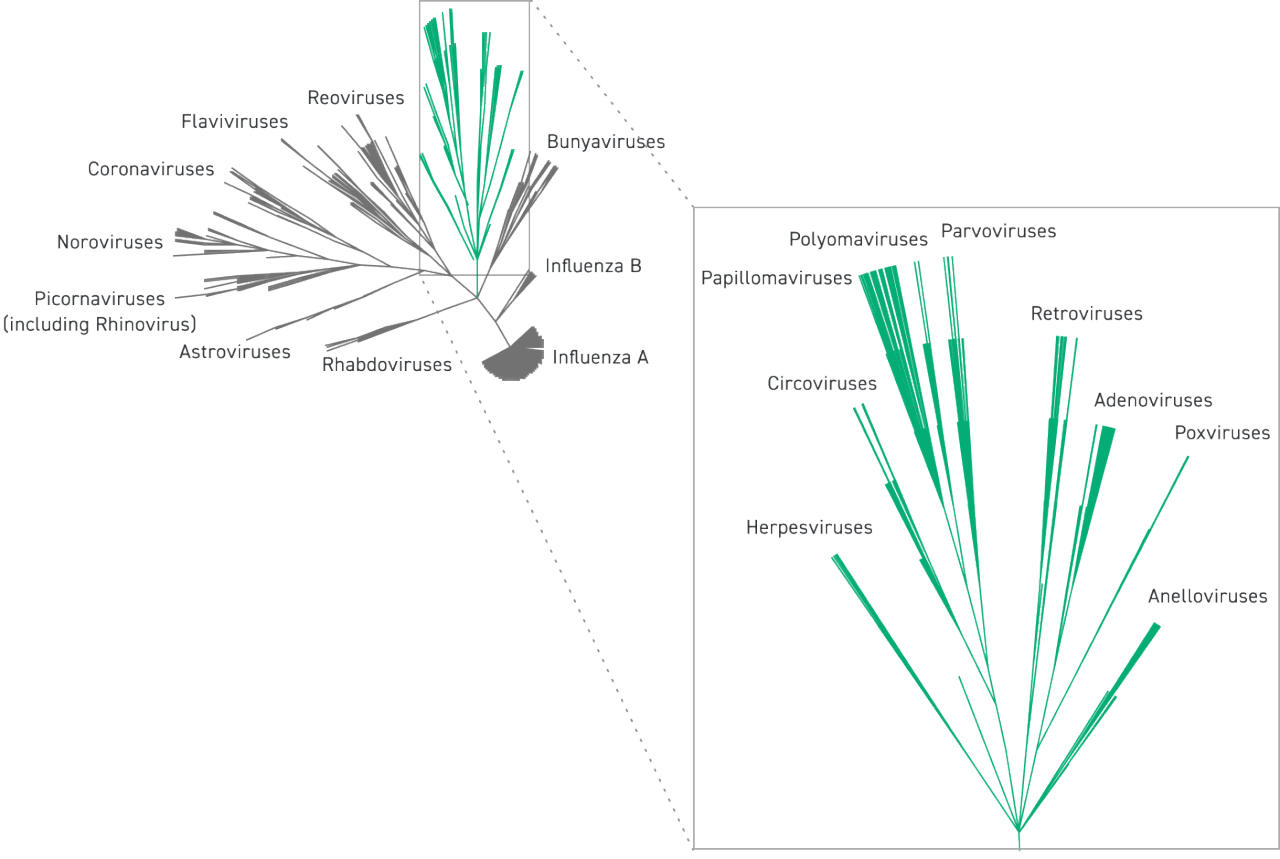
Twist’s Comprehensive Viral Panel includes 1,052,421 unique probes that collectively target every viral family in which at least one virus is known to affect humans. The panel also covers many animal viruses (e.g., bat coronaviruses), enabling the discovery of novel viral species regardless of origin.
Chen recalls that “the whole idea when we designed the panel was to create a tool researchers could use to gather definitive data on an unknown virus. PCR is challenging because it can’t multiplex well, so researchers are forced to check for only a handful of viruses at a time and are not able to obtain detailed genetic information on the viruses. With a hybrid capture panel, we can really cover as many viruses as we want. We built this panel to be comprehensive, meaning we included probes for all viral reference genomes that we could find, including several species of Ebola. Today, I’m very proud that we did this.”
Though they could not have known it at the time, the Twist team’s decision to include probes targeting the Bundibugyo virus—then an obscure strain of Ebola—would prove to be critical for today’s public health efforts. With the Comprehensive Viral Panel ready at hand, researchers in the DRC were able to identify the mysterious source of hemorrhagic fever8.
There is still much that needs to be done now to slow and eventually stop the current outbreak, including the development of new tests and therapeutics.But this outbreak makes one thing clear: the next epidemic won't announce itself in advance. The tools built to find what we're not yet looking for will be what catches it in time.
*For Research Use Only. Not for use in diagnostic procedures
**Reference to specific commercial products, manufacturers, companies, or trademarks in association with CDC materials does not constitute its endorsement or recommendation by the U.S. Government, Department of Health and Human Services, or Centers for Disease Control and Prevention.
References
Ahmad B, Sagide M, Sylivia Ntamwinja, et al. National burden of Ebola virus disease in Democratic Republic of the Congo: the urgency to act. Annals of Medicine and Surgery. 2024;86(8):4579-4585. doi:https://doi.org/10.1097/ms9.0000000000002213
Halbrook M, Lombe Pongombo B, Merritt S, et al. Serologic evidence of crimean-congo hemorrhagic fever virus exposure among livestock and farmers in the Democratic Republic of the Congo. Safronetz, D, ed. PLOS Neglected Tropical Diseases. 2025;19(10):e0013648. doi:https://doi.org/10.1371/journal.pntd.0013648
Tague C, Mayar Moustafa Budair, Rusho MA, et al. Exploring the national burden and challenges in the fight against yellow fever in the Democratic Republic of Congo. A review. Annals of Medicine and Surgery. Published online August 19, 2025. doi:https://doi.org/10.1097/ms9.0000000000003730
Merritt S, Mukadi PK, Kompany JP, et al. Detection of Marburg Virus Antibodies 25 Years After Outbreak in Watsa, Democratic Republic of the Congo. The Journal of Infectious Diseases. Published online March 16, 2026. doi:https://doi.org/10.1093/infdis/jiag155
Lambert J. Ebola testing has improved in DRC but still isn’t nearly enough. NPR. Published June 11, 2026. https://www.npr.org/2026/06/11/nx-s1-5853489/ebola-testing-democratic-republic-congo
Nolen S. Only the Right Tests Can Stop This Ebola outbreak. Congo Has Hardly Any. New York Times. Published June 2, 2026. Accessed July 1, 2026. https://www.nytimes.com/2026/06/02/health/ebola-tests-congo.html
Mukadi-Bamuleka D, Bulabula-Penge J, Weggheleire AD, et al. Field performance of three Ebola rapid diagnostic tests used during the 2018–20 outbreak in the eastern Democratic Republic of the Congo: a retrospective, multicentre observational study. The Lancet Infectious Diseases. 2022;22(6):891-900. doi:https://doi.org/10.1016/S1473-3099(21)00675-7
Mbala-Kingebeni, Placide. Initial genomes from May 2026 Bundibugyo Virus Disease Outbreak in the Democratic Republic of the Congo and Uganda. Virological. Published May 18, 2026. Accessed July 1, 2026. https://virological.org/t/initial-genomes-from-may-2026-bundibugyo-virus-disease-outbreak-in-the-democratic-republic-of-the-congo-and-uganda/1032
SitRep N°046/MVB_29/06/2026. Institut National de Santé Publique. Published July 1, 2026. https://insp.cd/sitrep-n046-mvb_29-06-2026/
Ghafari M, Cuomo-Dannenburg G. Molecular Evolutionary Analysis of the Current Bundibugyo Virus Disease Outbreak in DRC and Uganda. Virological. Published June 4, 2026. Accessed July 1, 2026. https://virological.org/t/molecular-evolutionary-analysis-of-the-current-bundibugyo-virus-disease-outbreak-in-drc-and-uganda/1042
Towner JS, Sealy TK, Khristova ML, et al. Newly Discovered Ebola Virus Associated with Hemorrhagic Fever Outbreak in Uganda. Basler CF, ed. PLoS Pathogens. 2008;4(11):e1000212. doi:https://doi.org/10.1371/journal.ppat.1000212
CDC. Ebola Outbreak History. CDC. Published May 6, 2024. Accessed July 1, 2026. https://www.cdc.gov/ebola/outbreaks/index.html
Geisbert TW. Marburg and Ebola Hemorrhagic Fevers (Filoviruses). Mandell, Douglas, and Bennett’s Principles and Practice of Infectious Diseases. Published online 2015:1995-1999.e1. doi:https://doi.org/10.1016/b978-1-4557-4801-3.00166-1
MacNeil A, Farnon EC, Wamala J, et al. Proportion of Deaths and Clinical Features in Bundibugyo Ebola Virus Infection, Uganda. Emerging Infectious Diseases. 2010;16(12):1969-1972. doi:https://doi.org/10.3201/eid1612.100627
Hulseberg CE, Kumar R, Paola ND, et al. Molecular analysis of the 2012 Bundibugyo virus disease outbreak. Cell Reports Medicine. 2021;2(8). doi:https://doi.org/10.1016/j.xcrm.2021.100351
Recommended Resources

Twist Bioscience HQ
681 Gateway Blvd
South San Francisco, CA 94080