


Get the latest by subscribing to our blog
If you’ve ever had to rerun an experiment because your sequencing reads got tangled up in barcode mix-ups, then you already know the value of good adapters. If not, consider this your friendly warning: not all NGS adapters and indexes are created equal.
In the high-throughput world of next-generation sequencing (NGS), success hinges on the tiniest details. Literally. At the heart of every good sequencing run is a well-prepared library, which often means a library fortified with adapters and indexes—short stretches of synthetic DNA that do the heavy lifting of making your sample readable, sortable, and above all, reliable.
Whether it's for population genomics, the study of cell-free DNA, or analyses of ancient genomes, unique dual indexes (UDIs) and unique molecular identifiers (UMIs) have quietly become essential tools in modern sequencing workflows. While UDIs and UMIs sound similar, these molecular gems solve very different problems. Together, they help researchers distinguish between real variants and noise, multiplex without fear, and keep their costs under control.
Twist Bioscience’s take on these tools? Build them right, test them thoroughly, and make them ready for scale.
What Are UDIs, and Why Should
You Care?
Let’s start with UDIs. In any multiplexed sequencing run, where multiple samples are pooled and sequenced together, each sample needs a barcode to track where it came from. A single index can do the job in simple cases, but if your goal is clean separation between samples in high-throughput runs (or if you’d like to avoid index hopping), UDIs are the gold standard.
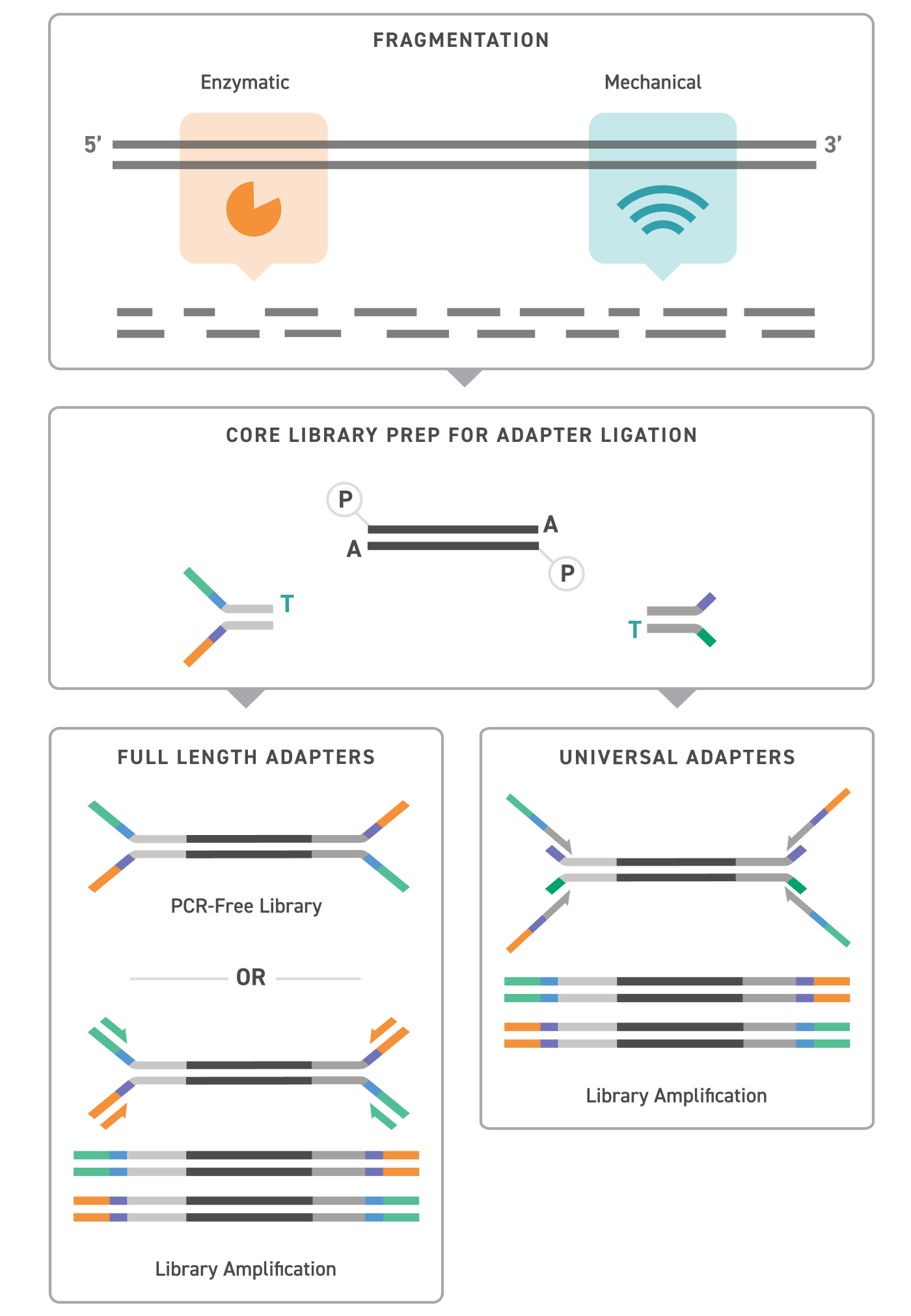
Twist UMI Workflow
A UDI uses two unique index sequences, one on each end of the DNA fragment (if you’re sequencing with Illumina technology, the indexes link onto the P5 and P7 ends). That two-pronged labeling strategy makes it far less likely that reads will get misassigned during demultiplexing. This extra assurance is a must for studies like population-scale genome sequencing, where thousands of samples are pooled together in a single, high-throughput sequencing run. Twist’s UDI adapters are built with a high degree of sequence accuracy and diversity, enabling accurate sample demultiplexing (even when bioinformatics pipelines allow for minor mismatches).
🔎 UDIs In The Wild: Applications in Agriculture
Researchers studying genetic diversity in crops, livestock, or wild fish populations, for example, often need to sequence samples from thousands of individuals. Doing so on a 1:1 basis is both impractical and costly.
With NGS, samples can instead be pooled to cut down on the number of runs. To make a pooled approach work, they rely on UDIs to confidently trace each sequence back to its original sample. Rather than worry about the logistics of sequencing, they can instead focus on analyzing population diversity, trait introgression, and more.
Learn more about NGS in agriculture here >>
Twist offers 3,072 unique indexes in its High-Throughput (HT) Universal Adapter System—each one empirically tested for both uniform read distribution and sequence accuracy. That means more confidence in your multiplexing, fewer reads lost to adapter bias or barcode errors, and a stronger foundation for your downstream analysis.
Twist Bioscience’s UDI Adapter portfolio highlights
HT Universal Adapter System (12 bp) : Perfect for automation, enabling 3,072 unique indexes for large-scale studies like rare disease gene panels.
Universal Adapter System (10 bp) : Balanced index designs reduce misassignment errors in cancer biomarker discovery and other multiplexed applications.
Full Length UDI Adapter (10 bp) : Ideal for PCR-free whole genome sequencing in projects like ancient DNA recovery, maximizing library complexity and data yield.
What About UMIs?
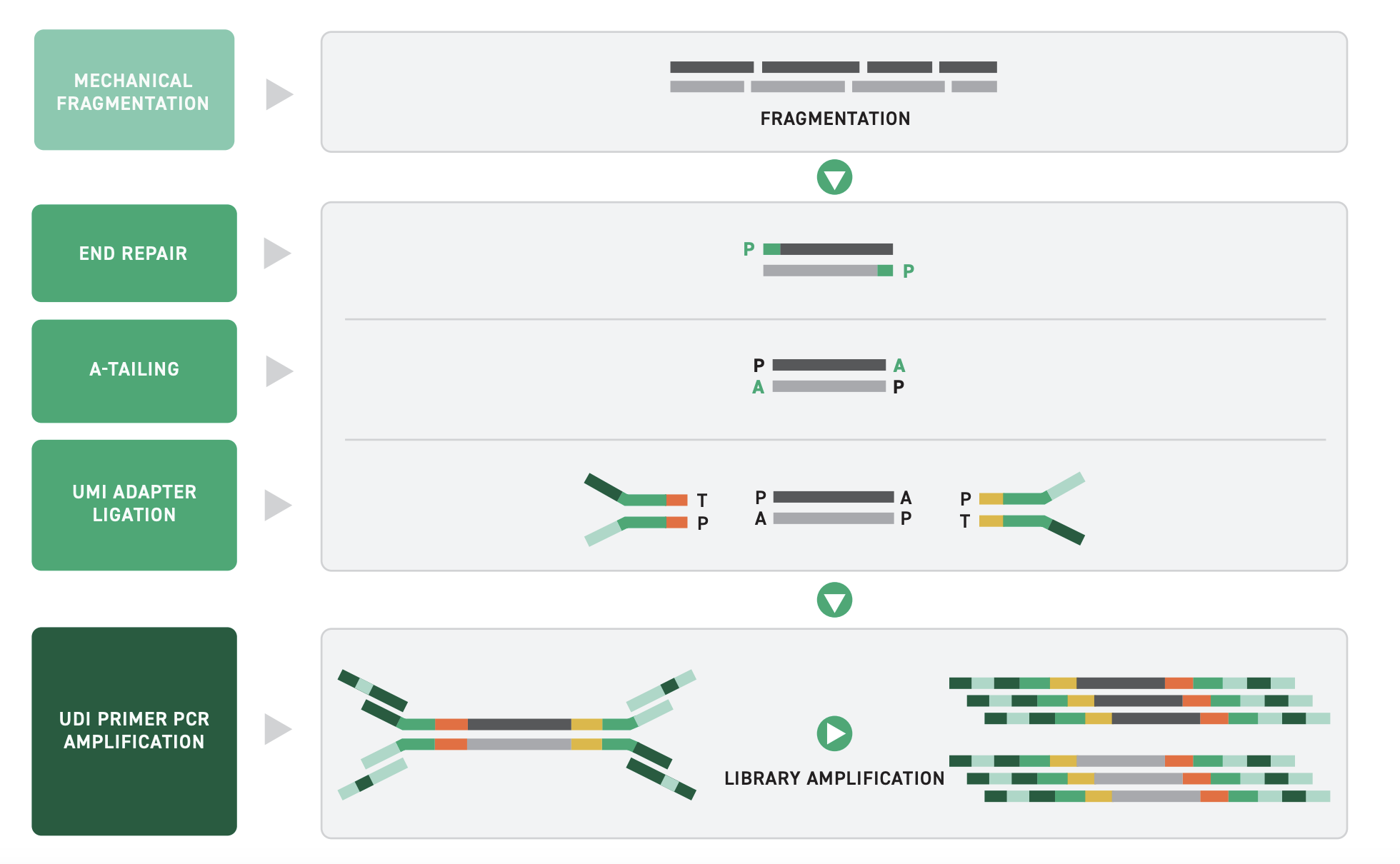
Twist UMI Workflow
While UDIs help distinguish which sample a read came from, UMIs answer a different question: Did this sequence come from a unique DNA molecule, or is it a PCR artifact?
UMIs are short sequences that tag each original DNA fragment before amplification, so you can track each of the unique molecules you started with. They’re essential when trying to detect low-frequency mutations in challenging samples like cell-free DNA (cfDNA), where false positives from PCR or sequencing errors can easily cloud the signal.
The Twist UMI Adapter System is engineered for exactly this use case. It pairs efficient ligation chemistry with high-fidelity barcoding to support ultra-sensitive applications, like detecting rare somatic variants or studying methylation patterns in cfDNA. Plus, because these adapters re compatible with 10 bp UDIs, they’re ready for automated, multiplexed workflows—so you don’t have to sacrifice scalability for sensitivity.
🧬 Better Methylation Sequencing
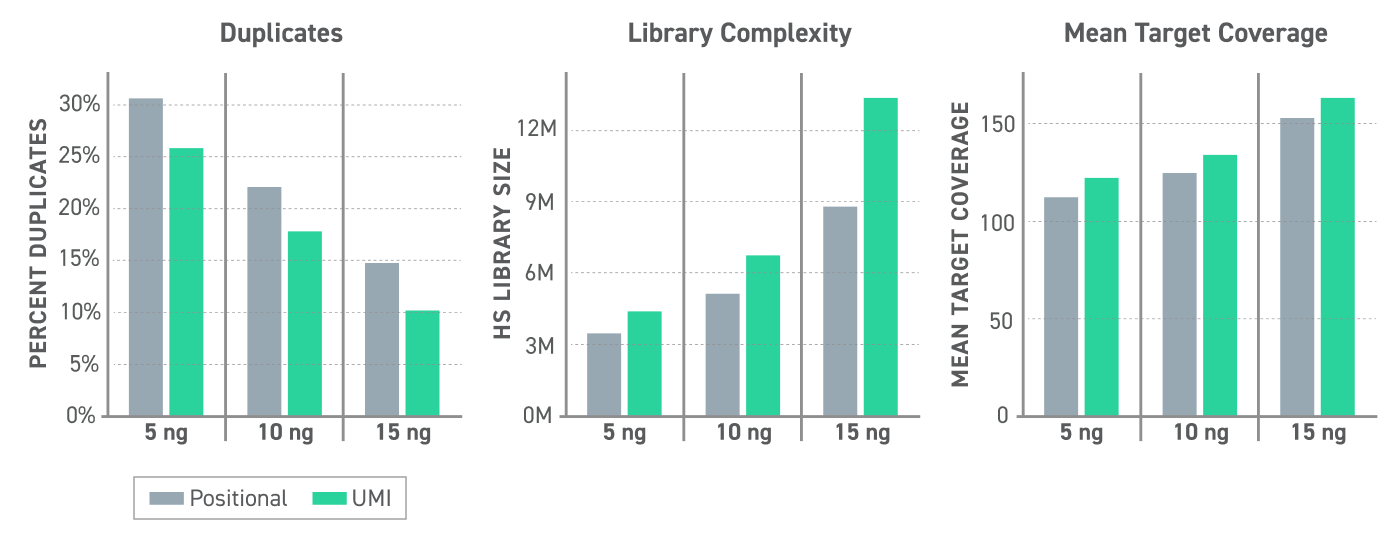
Twist has designed a set of UMIs specifically to support methylation sequencing. These UMIs can be integrated seamlessly into the Twist Methylation Detection System. The Twist Methylated UMI Adapters enable accurate deduplication, demonstrating a reduction of false duplication calls by 15% in low-diversity samples.
Their design ensures compatibility with enzymatic methylation sequencing (EM-seq) protocols, preserving fragment length, maximizing usable data, and resulting in improved target coverage and reproducibility, making them a critical tool for high-confidence methylation studies.
Scaling Smartly, Without Compromise
A common pain point in NGS workflows is scale: You want to run more samples in a single experiment, but your adapter set only supports a handful of indexes, or worse, they perform unevenly and introduce bias.
Twist solves this with a full suite of adapter systems that balance performance with practicality. Whether you’re using the 12-bp HT Universal Adapter System for massive multiplexing or the Twist Methylated UMI Adapters for epigenetic studies, each system is designed to deliver uniform read counts, minimal barcode collisions, and compatibility with T-overhang workflows. And because they’re built for automation—96- and 384-well formats are standard—you can scale up without scaling your headaches.
Don’t Let Bad Adapters Tank
Your Data
NGS workflows are complex, but the small things, like adapter chemistry and barcode design, can make or break your results. Whether you’re pooling thousands of samples for population sequencing, sequencing ancient genomes, or trying to fish out rare variants from cfDNA, UDIs and UMIs are the unsung heroes of data integrity.
Twist Bioscience has put serious thought (and serious testing) into its UDI and UMI solutions. The result? Adapter systems that perform reliably, scale smoothly, and integrate seamlessly into high-throughput and high-sensitivity applications alike.
So next time you build a library, don’t just grab any adapter off the shelf. Choose the ones designed for precision and built for discovery.
📊 From Rare Variants to Mega Studies
Twist’s UDI and UMI adapters empower you to:
✅ Pool thousands of samples to accelerate population genomics studies
✅ Detect rare cancer mutations in cell-free DNA with precision
✅ Analyze epigenetic changes in methylation studies
✅ Scale your research without sacrificing data quality
These small pieces of synthetic DNA might not look like much, but they’re the key to unlocking huge data sets and making discoveries that change the world.
Explore Twist Adapters Here >>

Twist Bioscience HQ
681 Gateway Blvd
South San Francisco, CA 94080